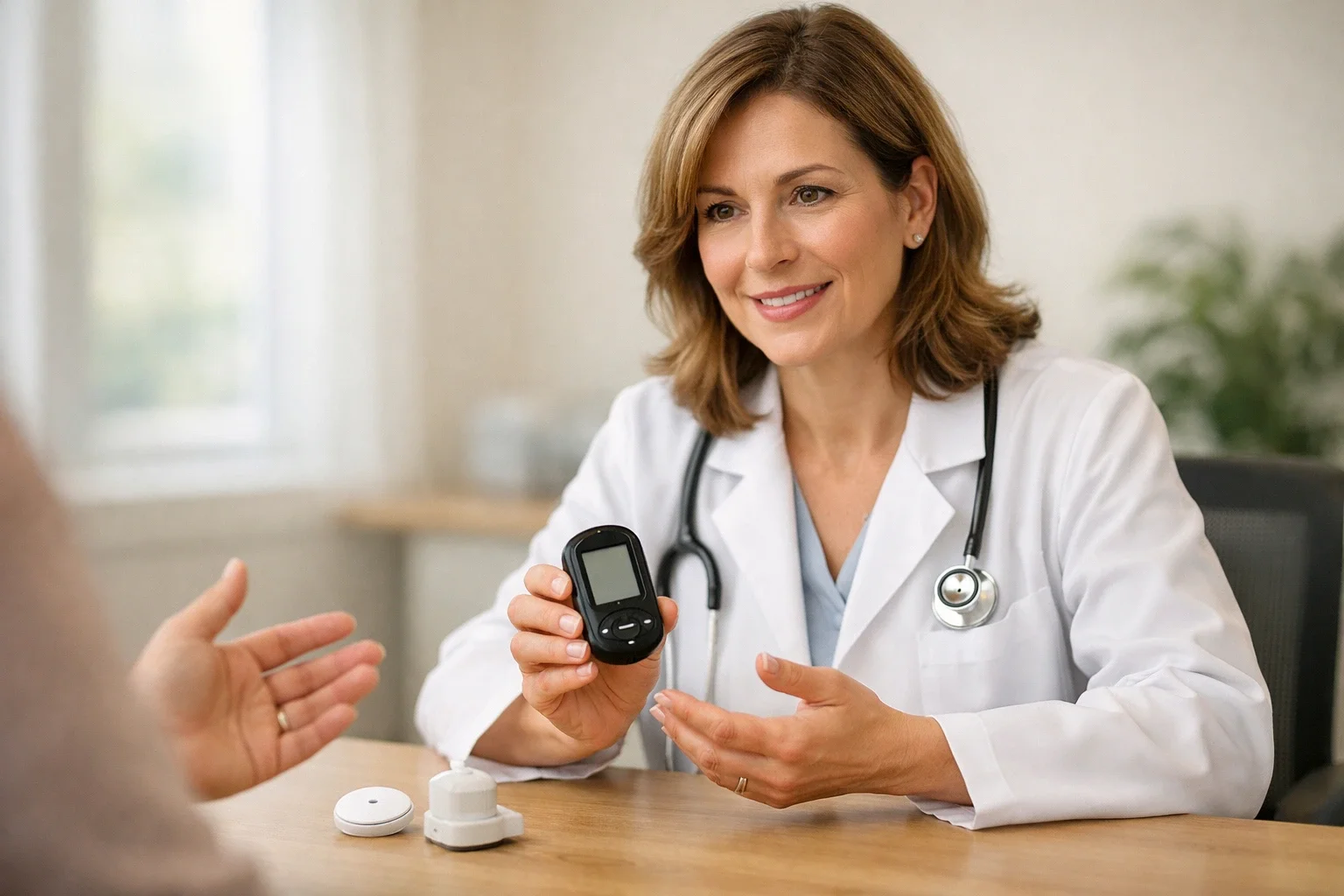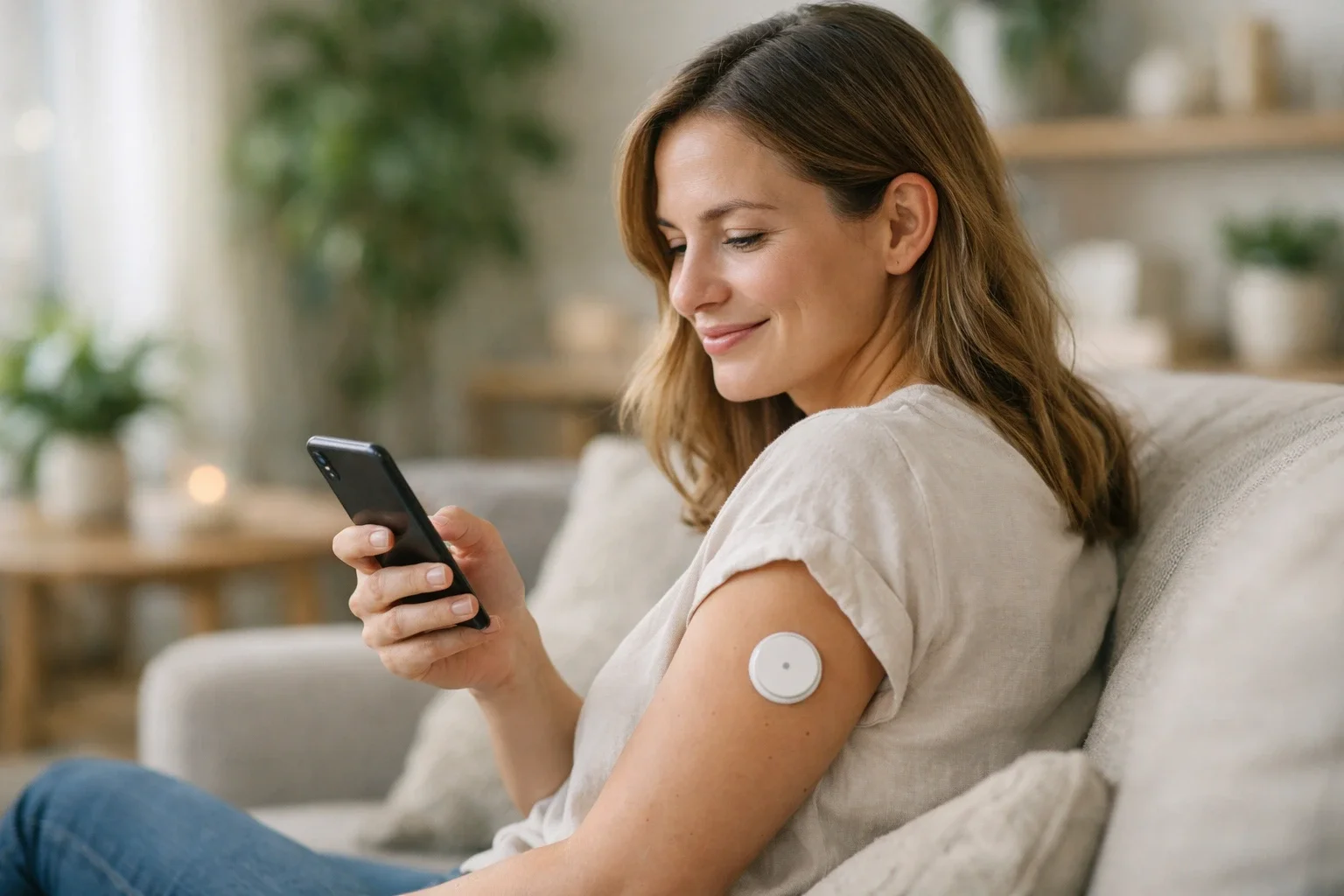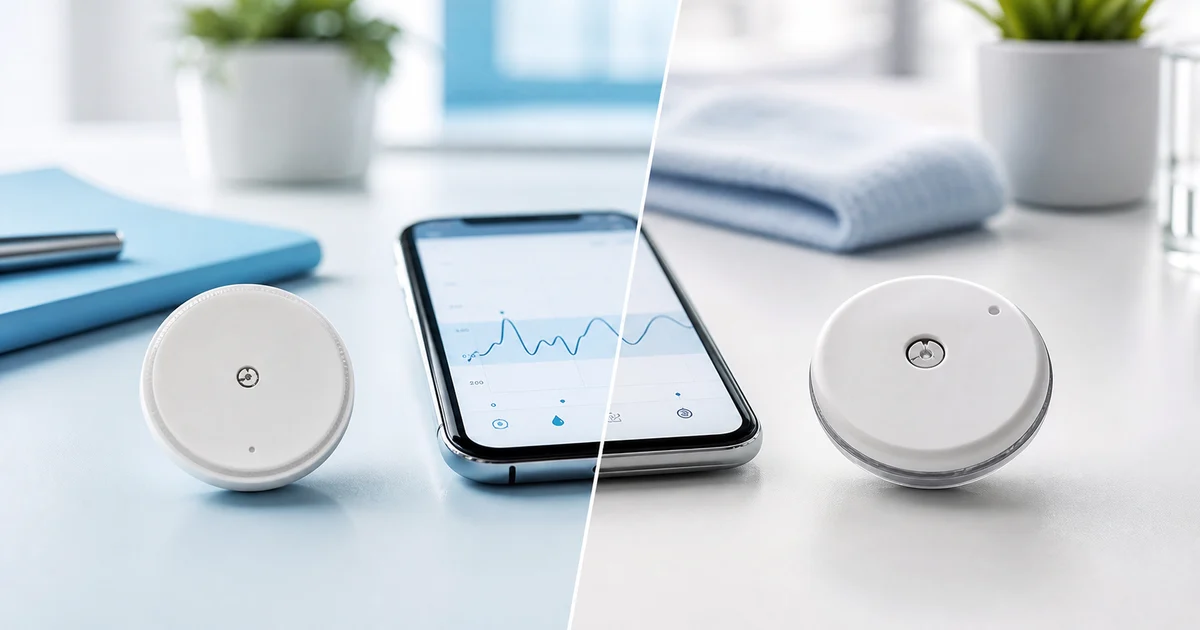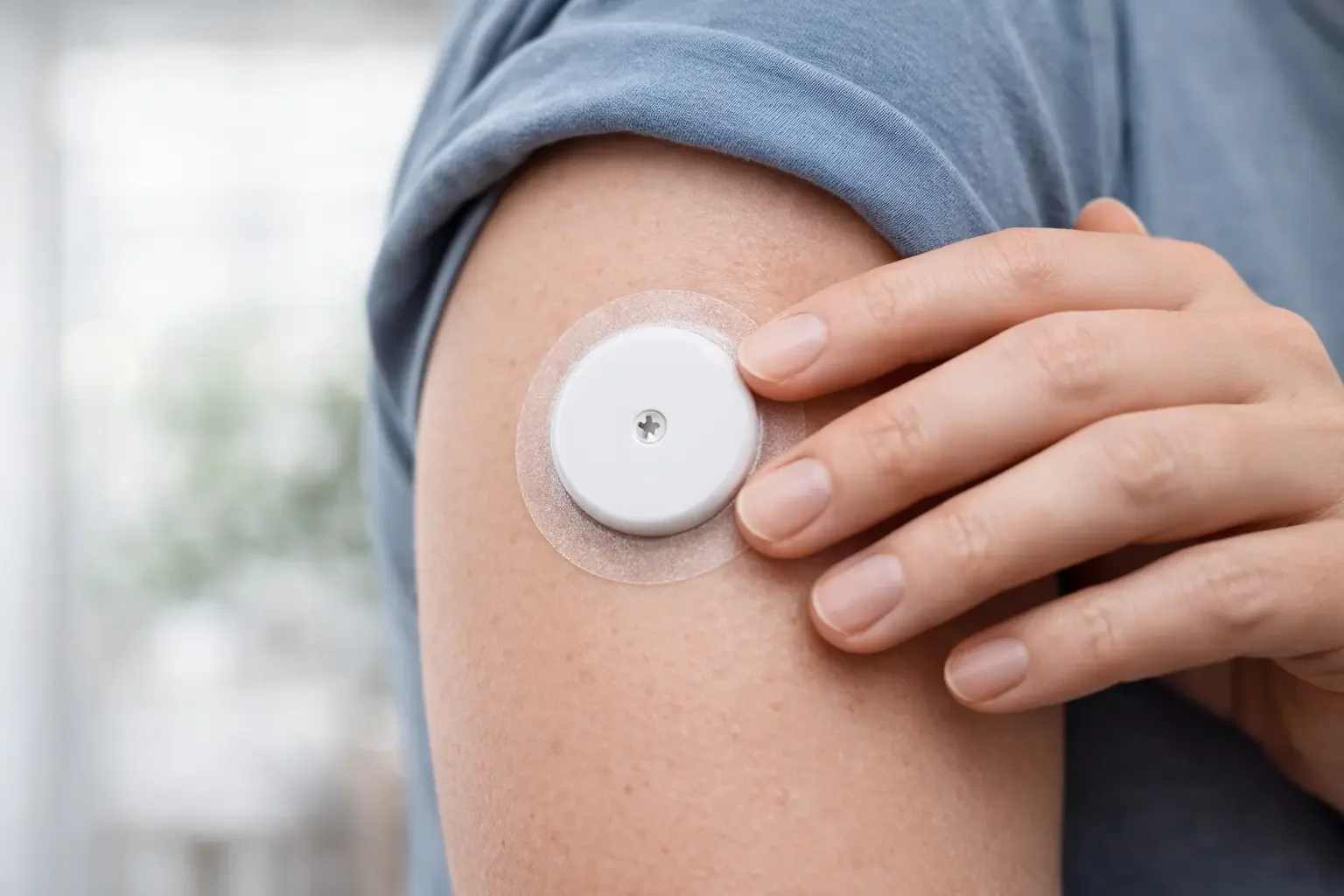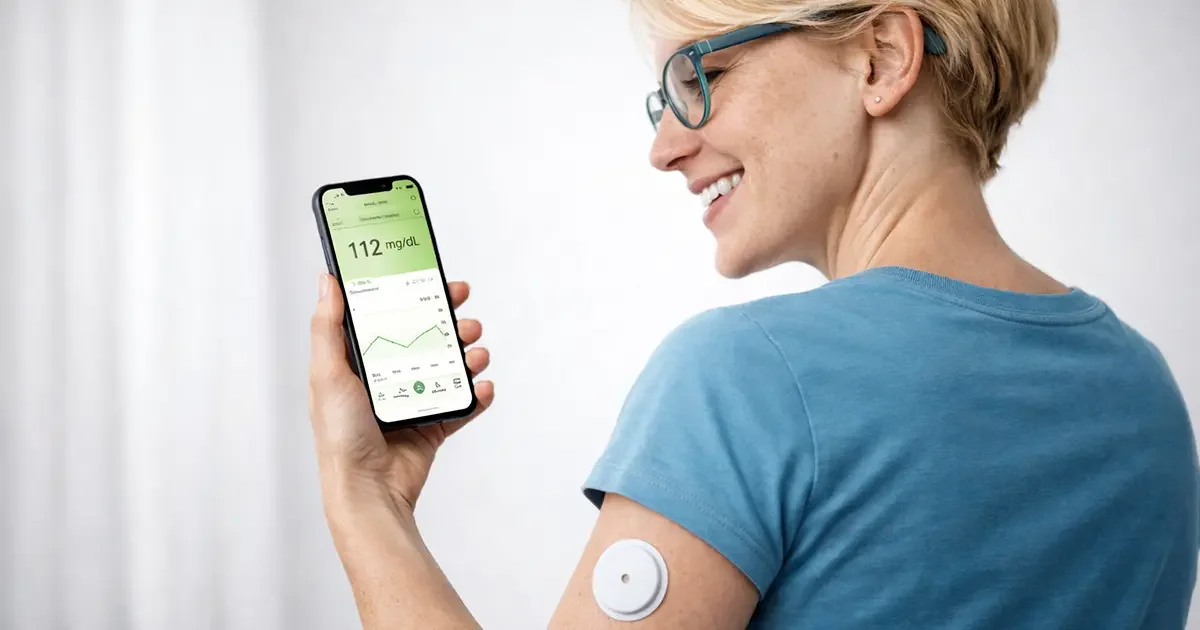
The best glucose sensor for you needs to match its medical indications, work with your phone and have a running cost you can sustain. Longer wear or an accuracy percentage in an advertisement does not settle the choice on its own.
This is a documentation-based guide to models sold by Prime Medical, not a comparative clinical trial or a ranking of every sensor available in Romania. Specifications are checked against manufacturer documentation; we do not claim undocumented hands-on experience.
Five models and their practical differences
| Model | Wear | Readings | Check before buying |
|---|---|---|---|
| LinX CGM | 15 days | 1 min | Phone and manual edition |
| Connect 21 | 21 days | 5 min | Connect 21 app |
| Sinocare iCan i3 | 15 days | 3 min | Age and application site in the manual |
| Accu-Chek SmartGuide | 14 days | Automatic | Calibration with a meter |
| Sibionics GS1 | 14 days | 5 min | SIBIONICS compatibility |
Wear times are the maximum specified for each model. The table is not a clinical effectiveness ranking. See glucose sensors and current offers for current price and availability.
LinX: frequent readings in a compact format
LinX CGM provides a reading every minute and up to 15 days of wear. Its 22 mm diameter and 2.16 g weight are useful reference points if size matters to you. Comfort also depends on placement, adhesive tolerance and individual skin. Check MicroTech’s compatible phone list.
Connect 21: fewer sensor changes
Connect 21 lasts up to 21 days, with readings every 5 minutes and a 15-minute warm-up. Its practical advantage is the longer interval between changes, not guaranteed accuracy superiority. Prime Medical’s retail package includes an alcohol wipe and adhesive patch alongside the sensor and applicator. Use the Connect 21 app linked on its product page.
iCan i3: 15 days and iCan Reach sharing
Sinocare iCan i3 sends readings every 3 minutes after a 2-hour warm-up. iCan CGM is the user app, while iCan Reach allows invited people to follow shared data. Documentation has evolved: check age and application site in the edition applicable to the supplied product, especially for children.
SmartGuide: prediction features and calibration
Accu-Chek SmartGuide is worn for up to 14 days. SmartGuide Predict estimates glucose trends and low-glucose risk; these features do not guarantee that an event will be prevented. A key purchasing consideration is the meter calibration requested by the app. Budget for the necessary supplies as well.
GS1: 14 days in the SIBIONICS app
Sibionics GS1 sends readings every 5 minutes after a one-hour warm-up. The app provides alerts and AGP reports. If you are choosing between it and LinX, read the LinX–GS1 comparison.
Why MARD alone does not decide the winner
MARD describes the average relative difference from a study’s reference method. The result is also affected by participants, protocol and glucose distribution. Percentages from different studies do not by themselves establish which sensor will be more accurate for you. Small differences on specification sheets are not treatment recommendations.
Before ordering
- Check indications, contraindications and the applicable manual edition.
- Confirm your phone and operating system on the manufacturer’s list.
- Compare daily and 30-day costs, not only the box price.
- Read the warranty terms and keep the sensor serial number.
A CGM sensor is not completely non-invasive: a filament stays under the skin. Keep a meter for situations specified by the manual, including readings that do not match symptoms.