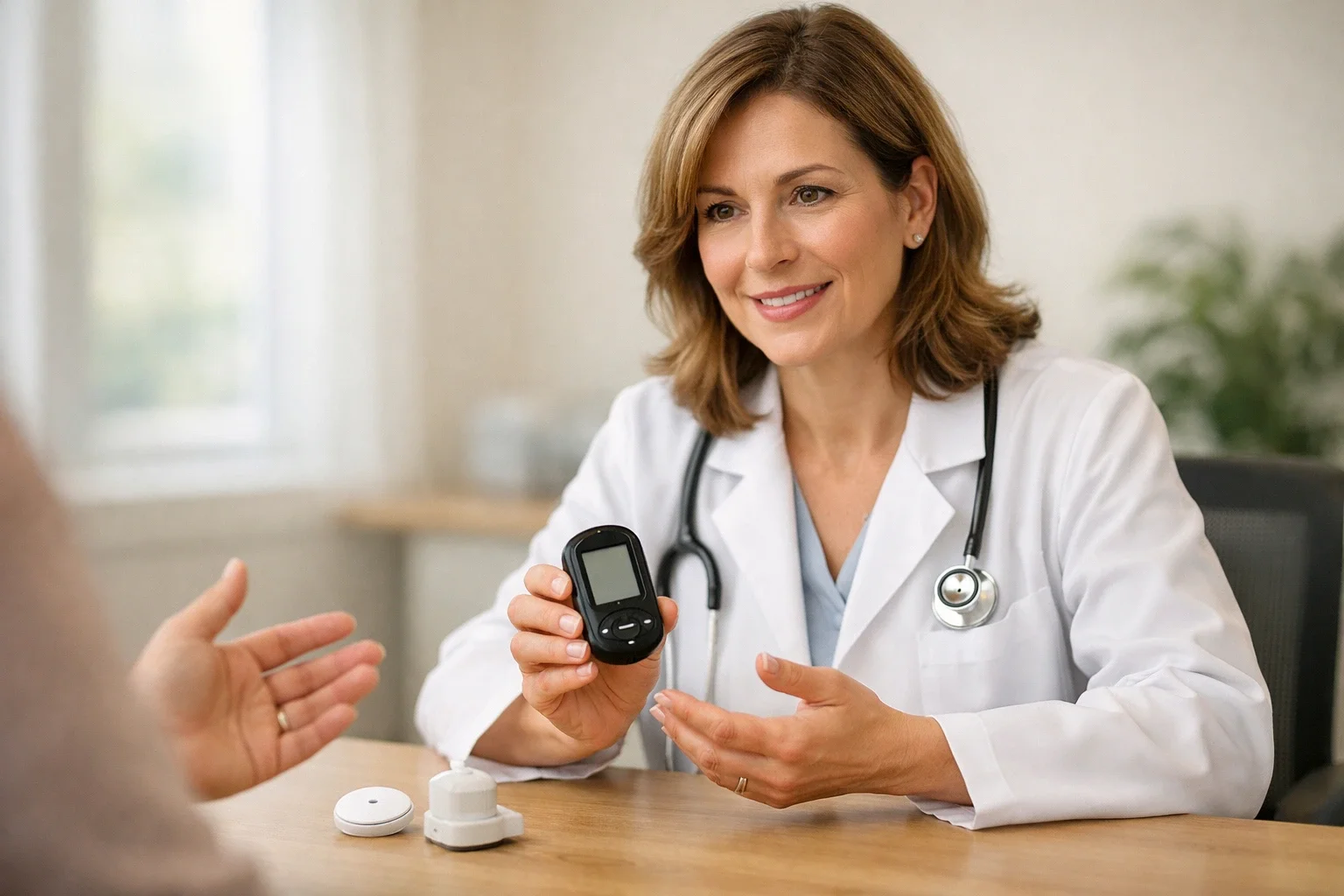
Classic Glucometer vs CGM Sensor - Two Different Monitoring Philosophies
“Do I need a CGM sensor or is a meter enough?” The answer depends on treatment, hypoglycaemia risk and the information you need, not price alone.
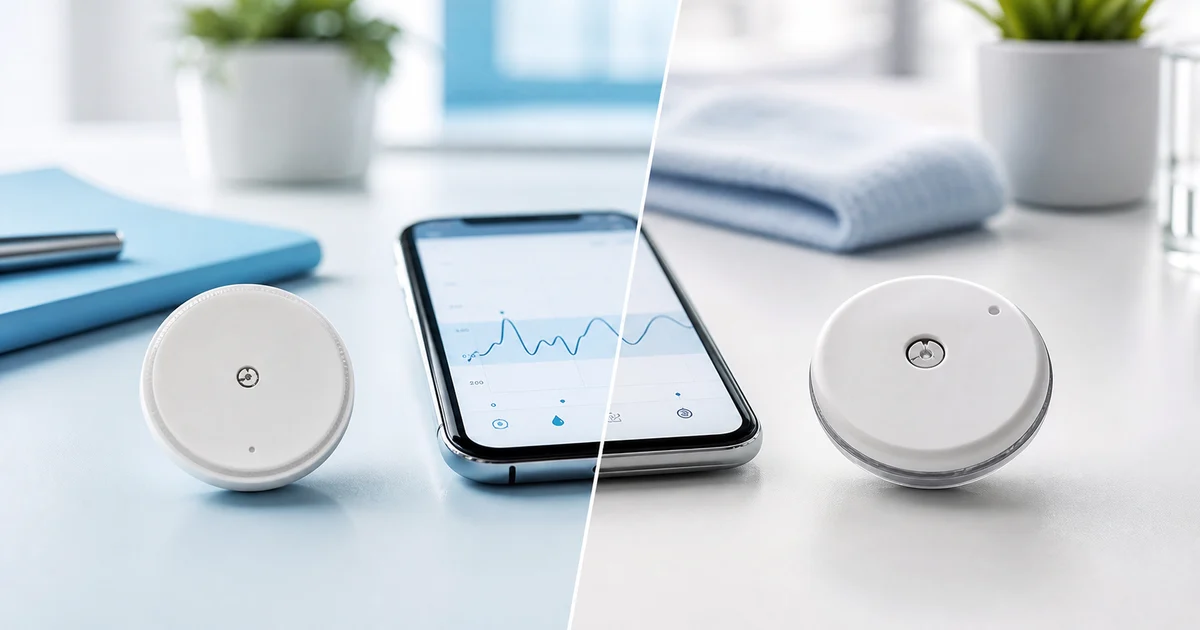
The classic glucometer and CGM sensor are not competitors - they are complementary instruments with different roles. In this article I will objectively explain when a glucometer is sufficient, when a CGM sensor is recommended, and when it's ideal to use both.
If you want to better understand how a CGM works, read What is a blood glucose sensor and how does it work.
How each method works - fundamental differences
Classic glucometer - a snapshot of blood glucose
A glucometer measures blood glucose from a drop of capillary blood, obtained by pricking your finger with a lancet. The drop is applied to a single-use test strip, and the result appears on the screen in a few seconds, depending on the meter.
Think of a meter as a photograph: it provides a measurement at the time of testing. Repeated tests can reveal a pattern but do not continuously describe the gaps between them.
Glucometers available on PrimeMedical.ro: Accu-Chek Instant (by Roche, result in 4 seconds) and CodeFree (by Standard Diagnostics, budget-friendly). Compatible tests: Accu-Chek Instant Tests and CodeFree Tests.
CGM Sensor - a continuous film of blood glucose
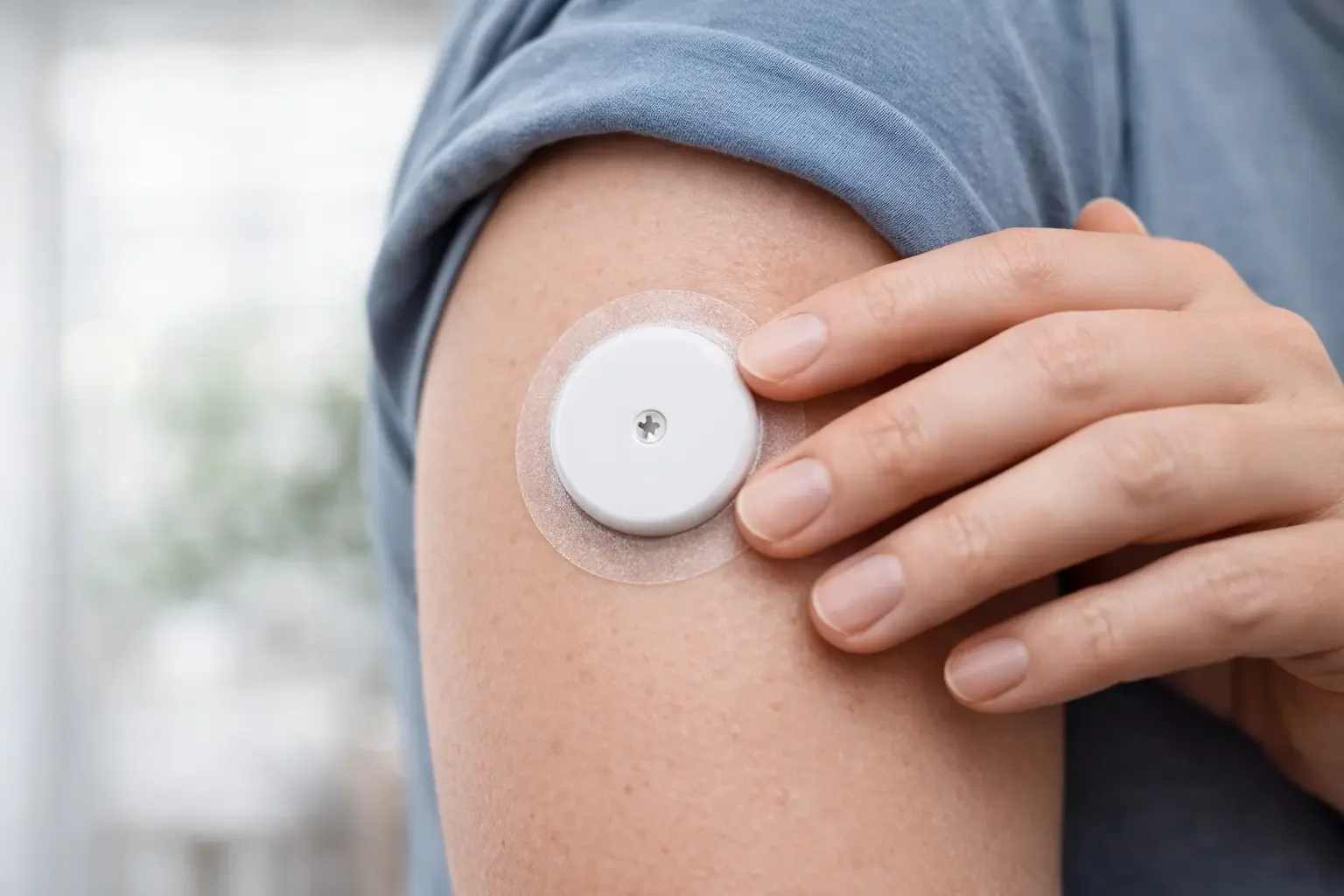
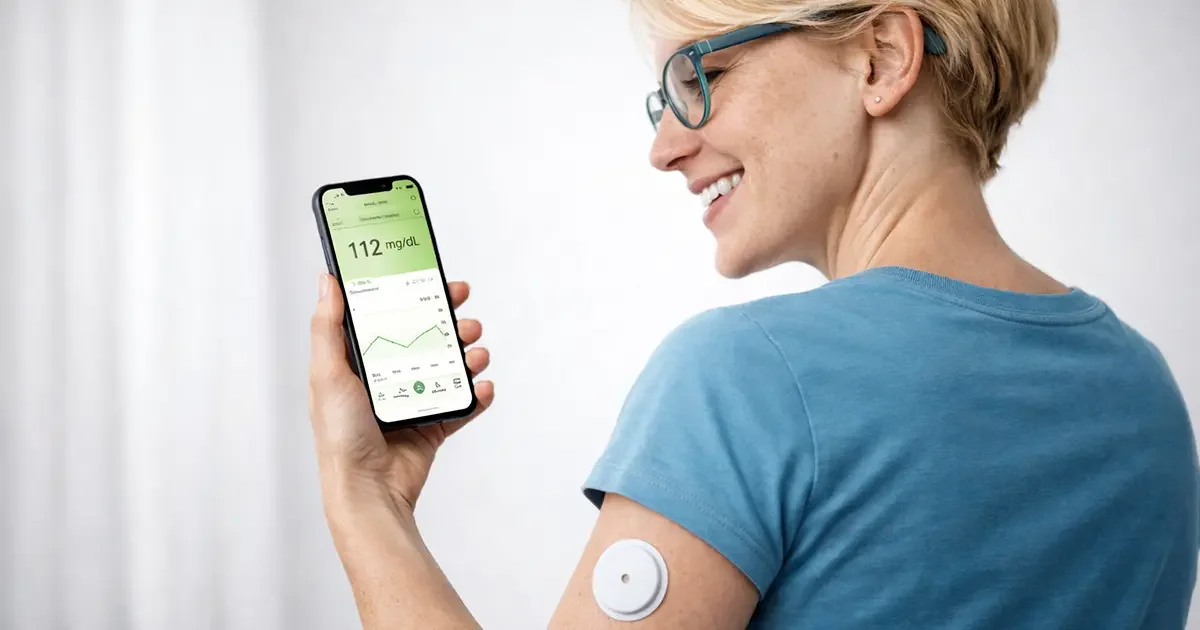
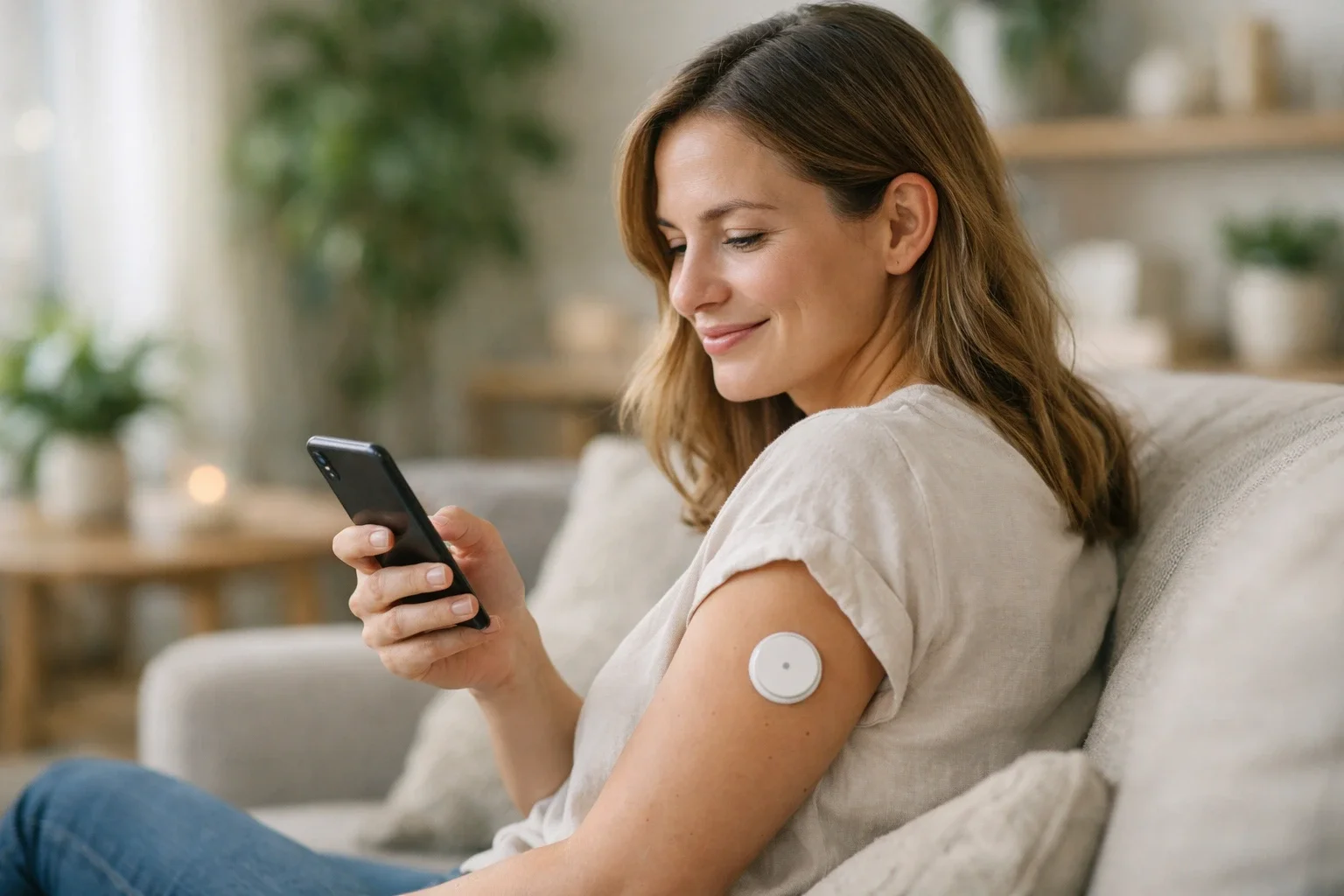
A CGM sensor measures glucose in interstitial fluid and sends repeated readings to a compatible app. Frequency and wear time depend on the model: LinX provides a reading every minute and up to 15 days of wear; GS1 provides readings every 5 minutes and up to 14 days. Follow the device’s warm-up and connection requirements.
CGM is like a film made from repeated readings. It helps reveal trends and episodes between finger-stick tests, but may have gaps or readings that need checking.
Detailed comparison table
Criterion | Classic glucometer | CGM sensor |
|---|---|---|
Type of measurement | Spot (on demand) | Continuous (every 1-5 min) |
Finger prick | Yes, with each measurement | Reduces finger-stick tests; they remain necessary in some situations |
Number of measurements/day | Individually planned frequency | Model-dependent: 1–5 minutes between readings |
Trend visibility | Through repeated tests and available history | Yes (graphs, directional arrows) |
Hypo/hyperglycemia alerts | Some models flag out-of-target results; no continuous monitoring | Depends on model and settings |
Nocturnal monitoring | Through a manual test at that time | Overnight readings; alerts when available and configured |
Initial cost | Meter price and compatible supplies | Sensor price and reader if required |
Recurring cost (30 days) | Number of tests × cost per test, plus lancets | 30 ÷ wear days × sensor price, plus backup testing supplies |
Comfort | Discomfort with each prick | Fewer repeated finger pricks; insertion may cause discomfort |
Data sharing with doctor | Diary or app where supported | Reports and sharing according to app features and permissions |
When is a glucometer sufficient?
A meter can remain the primary method when appropriate for the care plan, for example:
Type 2 diabetes without insulin - testing frequency depends on treatment, targets and hypoglycaemia risk. Some oral medicines can cause lows; the choice is not based on HbA1c alone.
Prediabetes or a recent diagnosis - your clinician determines whether home monitoring helps and how to use it. Diagnosis relies on appropriate investigations, not a home meter or CGM alone.
Occasional checks - when your doctor recommends sporadic, not continuous monitoring.
Very limited budget - if CGM cost is not accessible, the glucometer remains a valid and important alternative. It's better to measure with a glucometer than not to measure at all.
As a complementary method to CGM - even CGM sensor users should have a glucometer on hand for spot checks (unusual symptoms, suspected incorrect reading).
Recommended glucometers: Accu-Chek Instant from Roche, or CodeFree for reduced budget.
When is a CGM sensor recommended?
I recommend switching to a CGM sensor in the following situations, based on clinical guidelines and my experience:
Type 1 diabetes - CGM is recommended with insulin therapy and can improve glucose management. Benefits vary between individuals and cannot be promised as a fixed HbA1c reduction.
Type 2 diabetes with intensive insulin therapy - especially if there are hypoglycemia episodes or large fluctuations. Also read CGM for type 2 diabetes: Is the investment worth it?
Nocturnal or unrecognised hypoglycaemia - CGM readings and alerts can reveal lows between manual tests when the system is functioning and configured correctly.
Glucose variability - repeated readings provide more context between spot tests and help review patterns with your clinician.
Pregnancy with diabetes - benefits are well supported in type 1 diabetes; in other situations, the care team assesses usefulness and chooses a device with an appropriate indication. CGM cannot guarantee complete safety.
Desire for active optimization - motivated patients who want to understand how each meal, exercise, and stress factor affects their blood glucose.
CGM options on PrimeMedical.ro: LinX CGM (compact, IP68), Sibionics GS1 (14-day wear), Sibionics GS3 (check model specifications and availability), Accu-Chek SmartGuide (with predictive AI), Sinocare iCan i3 (price-to-quality ratio). Detailed comparison in Top 5 CGM sensors 2026.
Long-term cost analysis - real numbers
For a 30-day budget, use the prices in your cart. The examples below illustrate the calculation, not a recommended testing frequency or guaranteed offer:
Glucometer - monthly cost
Example: 4 tests/day - 120 tests in 30 days; at a hypothetical 1 RON per test, the cost would be 120 RON.
Example: 6 tests/day - 180 tests; at the same hypothetical price, 180 RON.
Example: 8 tests/day - 240 tests; at the same hypothetical price, 240 RON.
Separately: budget for lancets and other supplies required by the meter instructions.
CGM Sensor - monthly cost
LinX CGM, 15 days: two complete wear periods total 30 days. Sensor cost is twice the current unit price, excluding warm-up gaps and backup tests.
Sibionics GS1, 14 days: average 30-day cost is unit price × 30/14. Starting without stock, you need a third sensor for days 29–30, with wear remaining for the next period.
Accu-Chek SmartGuide, 14 days: the same 30/14 calculation applies, distinguishing average use cost from cash paid for three whole sensors. Include supplies for calibration required by the manual.
CGM adds repeated readings, trends and, depending on the model, alerts. Whether these features justify the cost difference is an individual decision with your care team.
Can I use both methods simultaneously?
Yes, they are complementary tools. Where appropriate for your care plan, use a CGM sensor as your primary monitoring method and a glucometer for:
Checks when you have unusual symptoms (dizziness, sweating) and the CGM value doesn't match what you feel
When CGM does not provide usable data or the phone is unavailable; in emergencies follow your care plan and seek help.
During the model-specific warm-up and whenever the manual requires confirmation or calibration.
An Accu-Chek Instant glucometer with a set of Accu-Chek Instant tests is one example of a meter and matching supplies for finger-stick testing.
Final tips
Compare the information needed, actual cost and effort of use. Meters and CGM serve different needs, and current offers should be checked before buying.
If your clinician considers CGM useful, compare indication, compatibility and long-term cost. Keep a meter and its supplies available even if finger-stick tests become less frequent.
Also read: Top 5 CGM sensors Romania 2026 | How to choose your first CGM sensor | How much does a CGM sensor cost in Romania