CGM for type 2 diabetes - a legitimate question
Can CGM in type 2 diabetes help if you do not use insulin? The answer depends on monitoring goals, treatment and how the data will be used with the healthcare team. Not everyone has the same need for continuous monitoring.
Trials have studied different groups, sometimes with structured education. Their findings support discussing CGM beyond multiple-injection regimens, but do not guarantee the same benefit for every treatment or commercial sensor.
What clinical studies say about CGM and type 2 diabetes
The MOBILE Study (2021)
The randomized MOBILE trial, published in 2021 included 175 adults with type 2 diabetes using basal but not prandial insulin. At 8 months, the adjusted HbA1c difference was −0.4 percentage points favouring CGM; the TIR difference was 15 percentage points, about 3.6 hours daily.
Severe hypoglycaemia was rare in both groups. This does not establish a general reduction in severe events and is not a trial of LinX or every store product.
The IMMEDIATE Study (2023)
In IMMEDIATE, 116 adults with inadequately controlled type 2 diabetes on non-insulin therapy were followed for 16 weeks. Intermittently scanned monitoring plus diabetes self-management education was compared with education alone.
Between-group differences favoured the intervention: 9.9 percentage points in TIR, about 2.4 hours daily, and 0.3 percentage points in HbA1c. Population, device type and accompanying education matter; these figures do not predict an individual result or prove the effect of a particular food.
How to interpret the studies
When interpreting research, check participants, treatment, follow-up, comparator and device. Findings in people using basal insulin do not automatically transfer to those without insulin or another sensor model.
ADA 2026 guidance bases technology choices on needs and preferences and emphasizes training. A consultation should turn data into a practical plan; more readings are not an end in themselves.
How CGM concretely helps in type 2 diabetes
Real-time dietary feedback
CGM can help show how glucose changes around meals. Record portion, timing, medication, activity and context. One curve does not prove that a food is good or bad or independently establish why a change occurred.
Discuss repeated patterns with a professional. The goal is not to eliminate every post-meal rise through increasing restriction, but to find an eating pattern suited to health and treatment. A meter remains useful for indicated checks.
Motivation for physical exercise
When you see in real time how a 20-minute walk after a meal "flattens" the glucose spike, the motivation to move increases exponentially. It's no longer generic advice "exercise" - it's visible, personal proof that movement actually works.
Identification of hidden postprandial hyperglycemia
HbA1c near target can conceal periods above or below range. CGM can reveal the distribution of readings and times worth discussing, including after meals.
These data do not independently determine cardiovascular risk or automatically justify a medication change. The clinician considers them alongside symptoms, blood pressure, lipids and other risk factors.
Medication optimization
CGM data helps the doctor optimize treatment. It may be necessary to adjust the metformin dose, add another medication, or change the time of administration. With continuous data, these adjustments are much more precise.
Who benefits most from CGM in type 2 diabetes
Need is individual. Insulin, medicines that can cause hypoglycaemia, unexplained readings or difficulty reaching goals can prompt a discussion about CGM.
Without insulin, one goal may be understanding patterns alongside education and review. Duration should not be decided solely by HbA1c or a recent diagnosis. Consider cost, training access, ability to use the device and preferences.
Tell the team if data cause anxiety or are hard to interpret. Different settings, a different pattern of use or another monitoring method may be appropriate.
Common objections - and honest answers
"It's expensive and I don't get reimbursed"
Calculate the budget from current prices, product wear time and the agreed period of use. Include delivery and supplies for meter checks. The cost guide explains comparison methods.
For public-system access, check current eligibility and the process with your clinician and the relevant institutions. Reimbursement is not promised and a private purchase should not be assumed refundable.
Intermittent use may be discussed in some situations, but this article provides no universal two-week schedule 2–3 times yearly or proof that benefits persist unchanged between sessions.
"My blood sugar is controlled, I don't need it"
HbA1c at target matters, but it is not the only consideration. Hypoglycaemia, treatment and goals may justify additional monitoring; others may have an adequate plan without continuous CGM.
The usefulness and frequency of monitoring depend on risks and specific care questions, not HbA1c alone. Ask which question the data would answer and how this would affect care.
"I don't want to become obsessed with numbers"
This concern is valid. Some people react with anxiety to seeing every fluctuation. If you're predisposed to health-related anxiety, discuss with your doctor the usefulness of CGM for you specifically. It's not a suitable tool for absolutely everyone, and that's OK.
How to start with CGM if you have type 2 diabetes
If you've decided to try, here's a practical plan:
Step 1 - Talk to your endocrinologist. Get a recommendation and set goals (what you want to learn from CGM data).
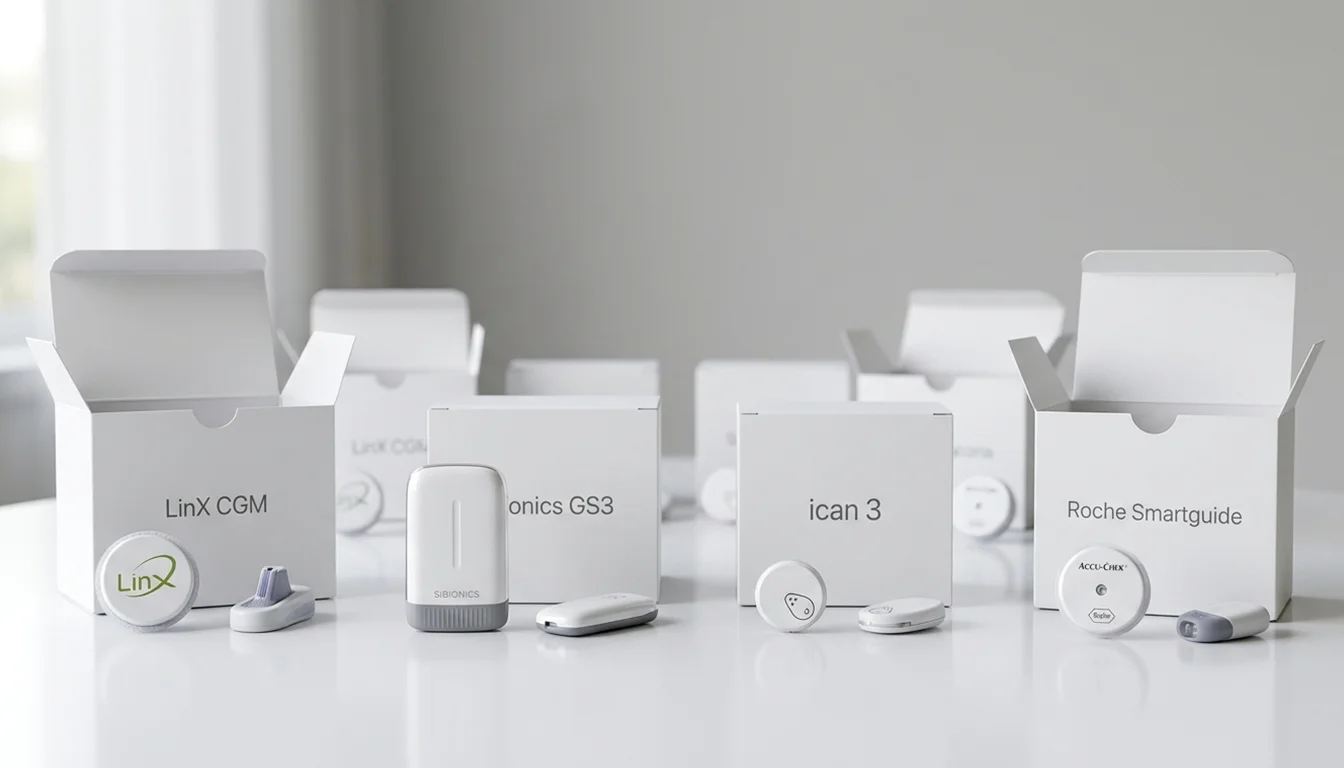
Step 2 – Choose a suitable sensor by indications, phone, app, warm-up and calibration requirements. Factory calibration does not mean removing the meter from your care plan.
Step 3 – Start according to instructions and the agreed plan. Record routine and symptoms without delaying medical advice just to collect baseline days.
Step 4 – Agree suitable food or activity changes and observe repeated patterns. Do not change medication or treat one reading as proof that an intervention is safe or effective.
Step 5 - Analyze the data with your doctor. The 14-day AGP report provides a clear picture of your glucose profile and guides therapeutic decisions.
CGM and glycated hemoglobin - a winning team
CGM doesn't replace the HbA1c test - it complements it. HbA1c shows your "grade" from the last 3 months. CGM shows "why" you got that grade and "how" you can get a better one. Together, they provide a complete picture of your glycemic control.
Bring the report and practical questions to the consultation: when unusual readings occur, accompanying symptoms and what changed. Discussion gives the data meaning; they are not a stand-alone diagnosis.
Three useful questions for the consultation
A report can raise questions that one HbA1c value does not answer. Here are three situations to discuss, without assuming the same explanation applies to everyone.
Overnight lows: follow the care plan and manual to check whether episodes are real. A lack of symptoms does not exclude hypoglycaemia. The clinician evaluates treatment and other possible causes.
Post-meal highs: compare timing and portions alongside medication, activity and data coverage. Treatment changes are clinical decisions, not a universal medication checklist.
Unexplained fluctuations: bring the log and discuss any additional measurements or investigations needed. Not every graph change is caused by food, and another person’s outcome does not predict yours.
Cost of CGM for type 2 diabetes - how we make it accessible
Compare costs for the same intended period using current prices. One sensor’s price is not a monthly budget without considering wear time and any gaps.
The published subscription programme is for LinX; check quantity, frequency and plan discounts before subscribing. It does not automatically apply to every brand. Ask the team for commercial details.
CGM can support care, but an article cannot calculate how many complications or how much money one person would avoid by buying it. Agree a medical goal and sustainable budget, then review whether the data helped.

![CGM Blood Glucose Sensors: Complete Guide - Comparison and Selection [2026]](https://cdn.primemedical.ro/content/dr-petrache-prezinta-senzorii-de-glicemie.webp "CGM Blood Glucose Sensors: Complete Guide - Comparison and Selection [2026]")