Blood glucose monitoring is part of diabetes care; the appropriate method depends on treatment and individual needs. CGM sensors show glucose patterns throughout the day and can reduce fingerstick testing without eliminating every situation where a meter is needed. This Prime Medical guide explains how sensors work, practical differences and questions to ask before buying. Discuss medical suitability and interpretation with your diabetes team.
What are CGM glucose sensors?
A CGM glucose sensor (Continuous Glucose Monitoring) is a small medical device applied to the skin that automatically measures glucose levels in interstitial fluid at regular intervals of 1-5 minutes. Unlike traditional glucometers, which provide a single value at the time of testing, a CGM sensor builds a complete glucose profile over 24 hours.
The components of a CGM system are:
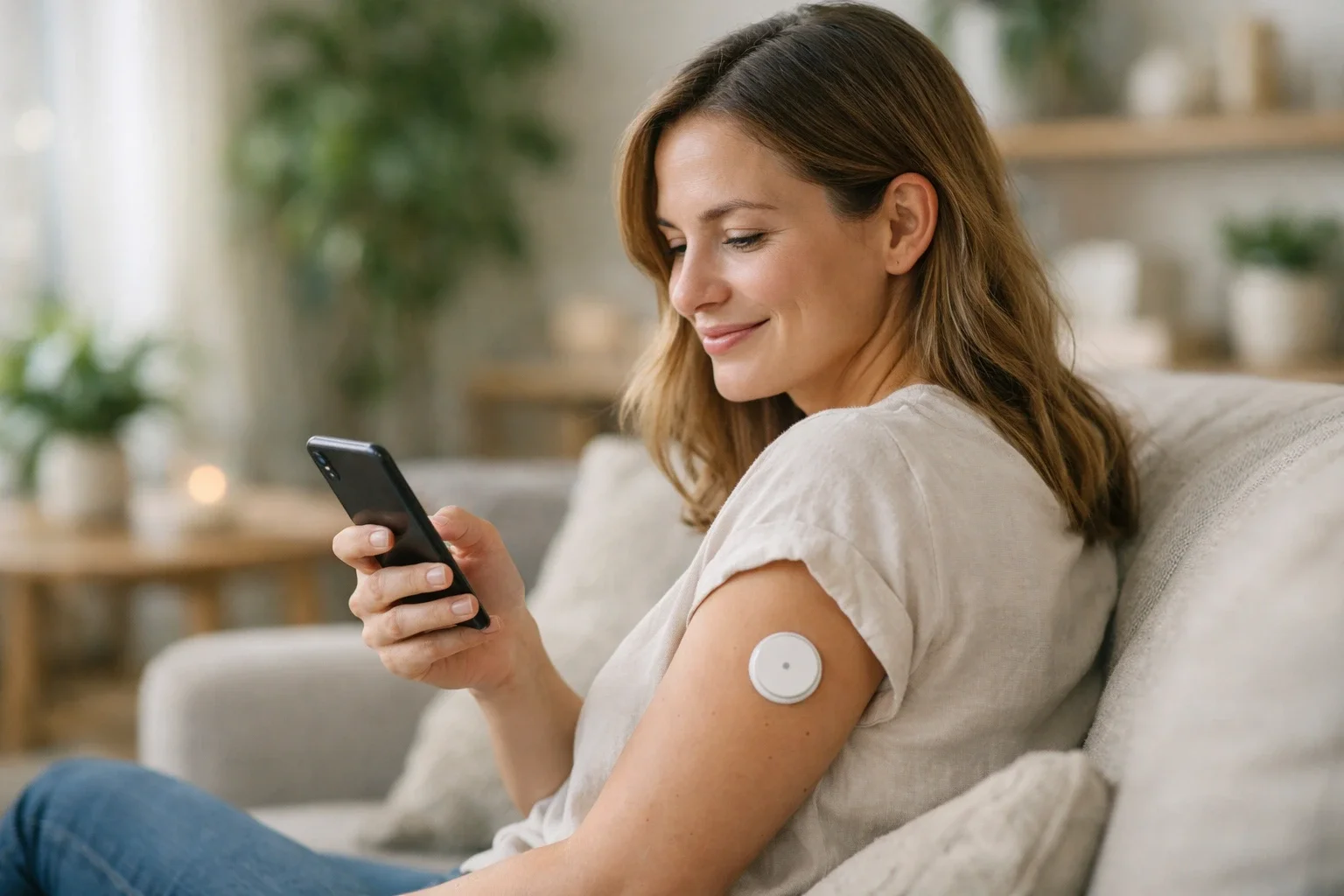
The sensor (filament) - a thin, flexible wire inserted under the skin (typically on the back of the arm) that detects glucose concentration in interstitial fluid
The transmitter - an electronic component integrated or attached to the sensor that wirelessly sends data (Bluetooth) to a receiver
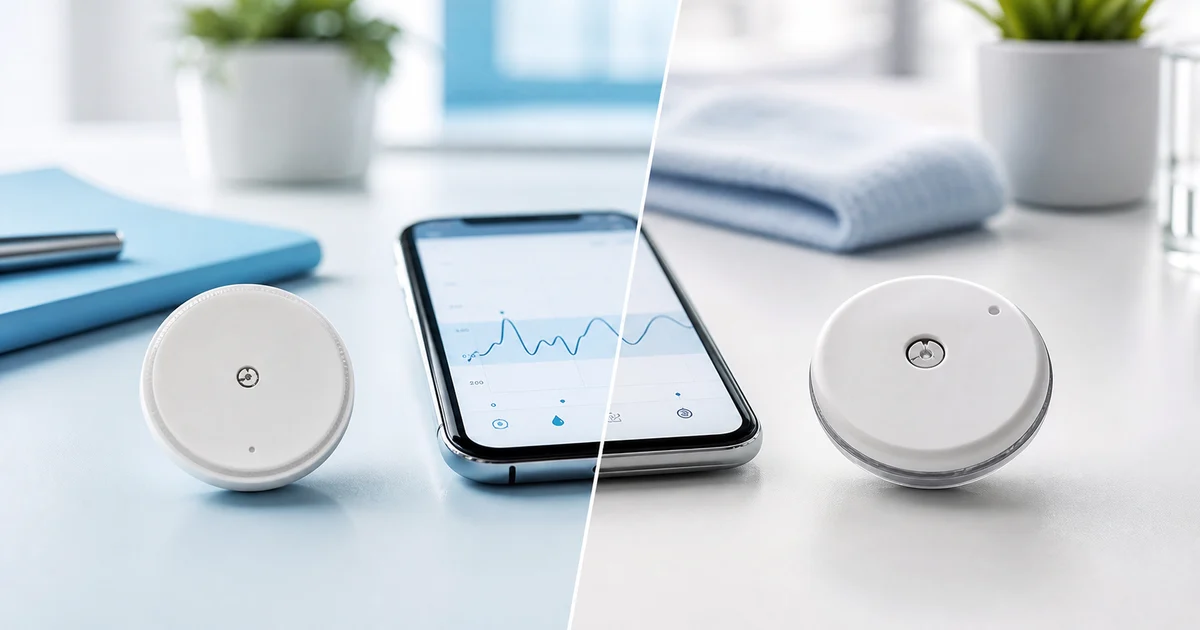
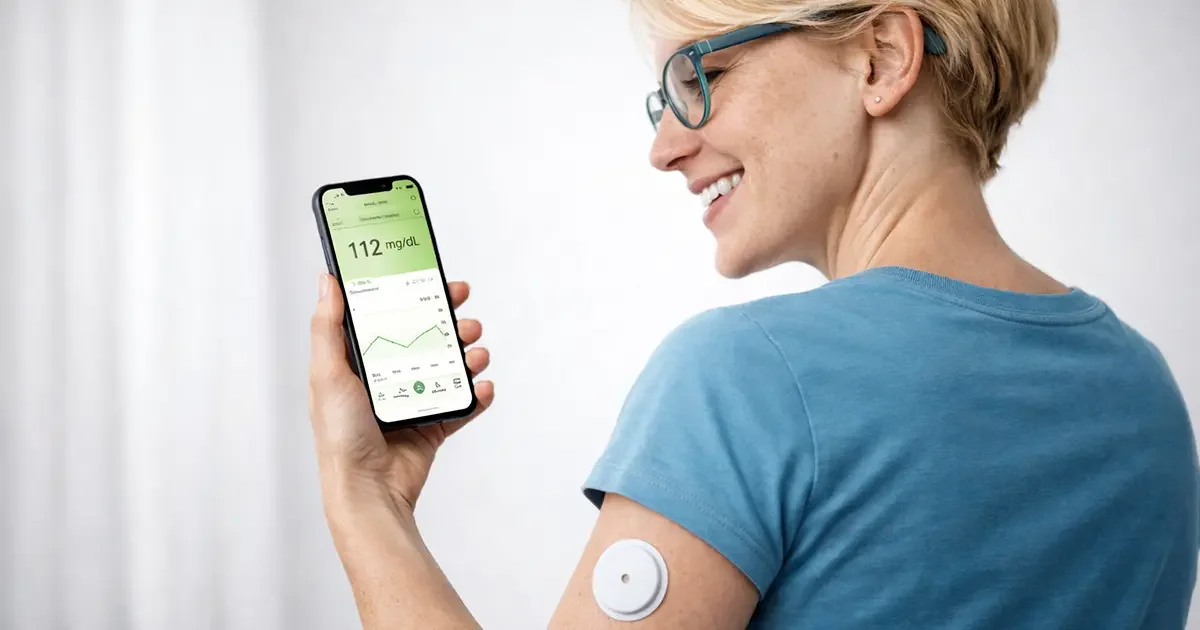
Mobile application - installed on a smartphone, displays real-time values, graphs, trends (directional arrows), hypoglycemia and hyperglycemia alerts, plus AGP (Ambulatory Glucose Profile) reports
Interstitial glucose and blood glucose are not identical at every moment, particularly during rapid changes. A difference does not automatically mean the sensor is faulty. A MARD percentage does not establish whether you may dose insulin: follow the sensor’s indications, app status and agreed care plan. Check glucose as instructed when readings do not match symptoms.
What CGM can offer: patterns after meals, during activity and overnight can inform diabetes care. There is no guaranteed HbA1c or hypoglycemia reduction for every person; benefit depends on clinical circumstances, use and responses to the data.
How information moves: the filament detects interstitial glucose, the transmitter sends readings, and the app displays values, trends and reports. Update frequency varies by model. Connection interruptions and warm-up can leave periods without available readings.
Why choose a CGM sensor over a traditional glucometer?
A meter measures blood glucose at the time of testing. It does not automatically track the interval between tests, but remains important for confirmation and, with some CGMs, calibration. Testing frequency depends on treatment and circumstances; there is no universal maximum of eight tests.
CGM sensors complement monitoring through:
Day and night data — useful for identifying patterns while the sensor is functioning and data are available.
Repeated updates — a five-minute interval theoretically gives 288 readings per day; a one-minute interval gives 1,440. More frequent readings do not by themselves demonstrate better accuracy.
Alerts — features, thresholds and any prediction functions differ between models. Check phone permissions and settings; an alert does not guarantee prevention of an episode.
Graphs and AGP reports - complete visualization of glucose control, useful for medical consultations
Multi-day wear — the model determines duration, while adhesive and application site affect comfort. Sensation during insertion varies between people.
Data sharing - you can send real-time values to family or your doctor
Different roles for a meter and CGM: the first measures glucose in a blood sample; the second tracks interstitial glucose and trends. CGM does not make the meter redundant. Keep a working meter and in-date strips for the situations described in your instructions and care plan.
Study results cannot be turned into a fixed percentage reduction in hypoglycemia for an individual. ADA 2026 recommends selecting technology around the person’s needs and circumstances, with training and continued access to blood glucose monitoring.
CGM models covered and their availability
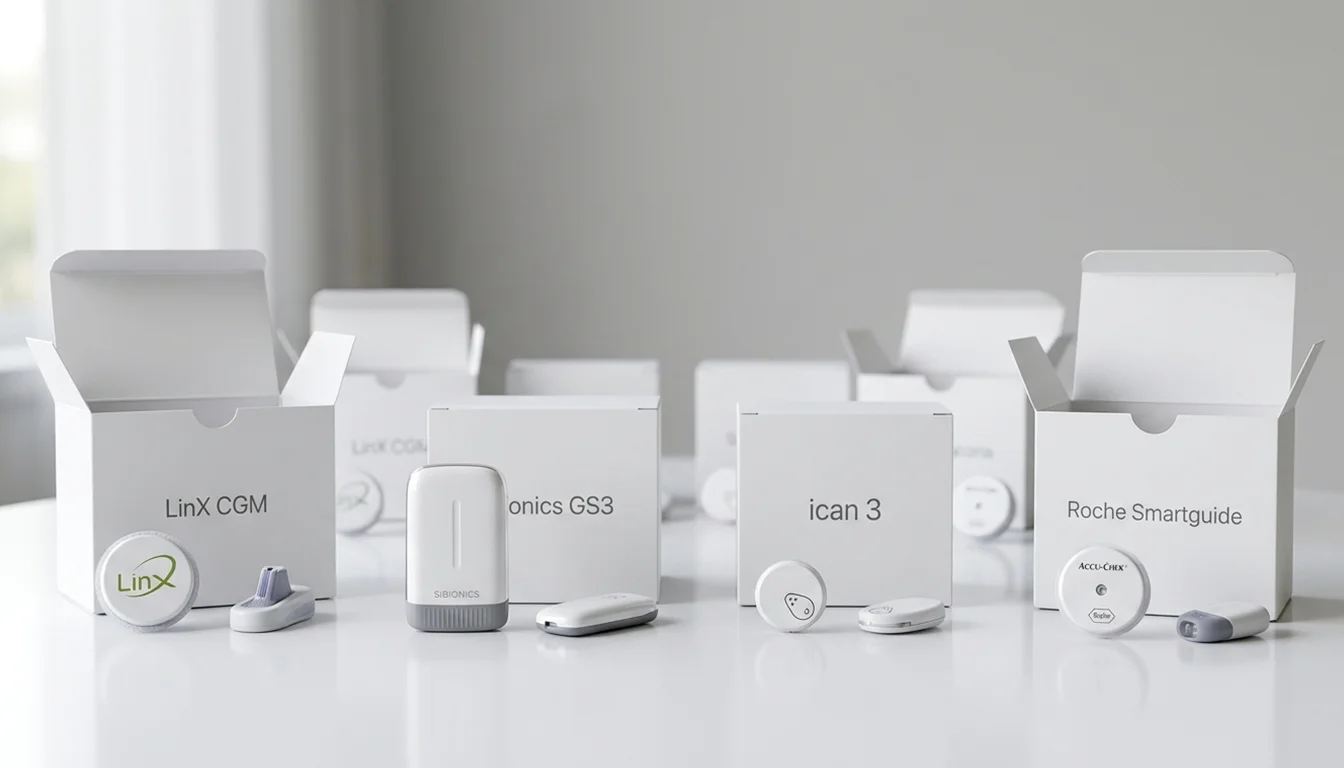
Below are the models discussed in this guide. Check the product page for stock, offers and the version supplied. GS3 is covered separately for orientation, not as a recommendation for immediate purchase. Connect 21 adds a longer interval between sensor changes.
Comparison reference points: LinX — up to 15 days; Connect 21 — up to 21 days; iCan i3 — up to 15 days; SmartGuide and GS1 — up to 14 days. App, calibration and indication differences may matter more than duration. MARD percentages from separate studies do not form a ranking.
LinX CGM - Glucose Sensor
LinX CGM from MicroTech provides up to 15 days of wear. Its 22 mm, 2.16 g format is compact; comfort remains individual. The manufacturer lists IP68 and calibration availability, but follow the manual edition supplied for actual conditions. Check the product page for today’s offer rather than relying on an old article price.
Connect 21 — a longer interval between changes
Connect 21 provides up to 21 days, five-minute readings and a 15-minute warm-up. Use the Connect 21 app and supplied manual. Prime Medical’s package includes an alcohol wipe and adhesive patch. Longer wear does not automatically mean better accuracy.
Sinocare iCan i3 - Glucose Sensor
Sinocare iCan i3 provides up to 15 days, three-minute readings and a two-hour warm-up. iCan CGM is the user app and iCan Reach is for invited followers. Check the supplied manual’s age and application-site indications. IP28 does not mean splash protection only; follow the model’s immersion limits.
Sibionics GS1 - Glucose Sensor
Sibionics GS1 provides up to 14 days, sending readings every five minutes after a one-hour warm-up. SIBIONICS offers alerts, reports and sharing. Routine calibration is not required, but meter checks remain necessary in situations specified by the manual. See the LinX–GS1 comparison for practical differences.
Sibionics GS3 - Glucose Sensor
Sibionics GS3 has an international manufacturer page describing 14-day wear and a 2.9 mm profile. Those references do not establish the availability or documentation of a Romanian batch. Prime Medical has no confirmed restocking date. For a current purchase, check available models rather than assuming GS3 is automatically more accurate.
Accu-Chek SmartGuide - Glucose Sensor
Accu-Chek SmartGuide from Roche provides up to 14 days. SmartGuide Predict adds glucose prediction features. The sensor requires the meter calibration requested by its app. After warm-up there is a trend mode; follow the instructions about when readings may be used for treatment decisions.
Complete comparison - CGM sensors table
Feature | LinX CGM | Connect 21 | Sinocare iCan i3 | Sibionics GS1 | Sibionics GS3 | Accu-Chek SmartGuide |
|---|---|---|---|---|---|---|
Price | See product | See product | See product | See product | No restocking date | See product |
Autonomy | 15 days | 21 days | 15 days | 14 days | 14 days | 14 days |
MARD | Not a cross-study ranking | Not a cross-study ranking | Not a cross-study ranking | Not a cross-study ranking | Not a cross-study ranking | Not a cross-study ranking |
Water resistance | IP68; see manual | See manual | IP28; see manual | IP28; see manual | Confirm local edition | See manual |
Size | 22 mm | See product specifications | - | See model specifications | Compact | - |
Weight | 2.16 g | See product specifications | - | See model specifications | - | - |
Calibration | Available; follow manual | Not routinely | Not routinely | Not routinely | Confirm local edition | Yes, as requested by app |
Bluetooth | Yes | Yes | Yes | Yes | Yes | Yes |
Brand | MicroTech Medical | Teljane Medical | Sinocare | Sibionics | Sibionics | Roche |
Important: Prices and stock are not fixed in this table. Check the CGM sensor category and selected product for current offers. GS3 international specifications are reference information pending confirmation of the local version.
How to choose the right CGM sensor for you?
Choosing the right CGM sensor depends on several personal factors. Here are the main criteria to consider:
1. Budget
Compare the same period: divide sensor price by wear duration, then multiply by the number of days needed. Two sensors do not cover every calendar month. The cost guide separates daily averages from the amount paid at checkout. For LinX, also check subscription plans, quantities and terms.
2. Accuracy (MARD)
MARD is the mean absolute relative difference from a study’s reference method. Comparison requires the protocol, population and glucose ranges; percentages from different studies do not form a clinical ranking. Look at low-glucose performance, indications and confirmation requirements as well as the advertised figure.
3. Autonomy
Maximum wear in this range is 14, 15 or 21 days. Starting without stock and assuming full wear, 365 days requires 27 fourteen-day sensors, 25 fifteen-day sensors or 18 twenty-one-day sensors. These budgeting calculations exclude warm-up gaps and premature replacements.
4. Water resistance
An IP rating alone is not sufficient swimming guidance. Its digits describe different protection categories; use the exact manual for permitted depth and duration. We do not describe IP28 as splash-only or IP68 as permission for unlimited immersion.
5. Ecosystem and application
Each sensor uses its own mobile application. Evaluate: compatibility with your phone (iOS/Android), interface (in Romanian?), ability to share data with your doctor, and integration with other health applications.
6. Brand and trust
A brand can matter for familiarity and support, but does not replace checking the specific device. Compare documentation, compatibility, assistance and warranty terms. A newer or more expensive model is not automatically a better fit.
Where to start: compare LinX for its compact format, Connect 21 for its interval between changes, and other models for their apps and requirements. Medical indications and phone compatibility come first. A commercial recommendation is not an individual prescription.
How to apply a CGM sensor?
The following steps are an overview, not a substitute for the manual. Application site, device preparation and activation differ between models:
Skin preparation — select a site permitted by the model’s manual, not automatically the arm. Clean and dry as instructed and check local contraindications.
Opening the applicator - each sensor comes with a single-use applicator, pre-prepared from the factory
Application — follow the applicator instructions in the box. A filament remains under the skin, so the device is not completely non-invasive. Stop and seek help if instructions are unclear; painless insertion cannot be promised.
Activation — use the app and code or pairing method specified by the manufacturer. Bluetooth, NFC and scanning a code are not the same process; not every model uses every step.
Warm-up — this varies from 15 minutes to two hours among the models discussed. LinX and GS1 take approximately one hour, while iCan i3 takes two. Follow app messages and additional calibration requirements; seeing a reading does not automatically mean it may be used for insulin dosing.
Important: Follow the manual’s excluded sites and site-rotation instructions. This does not guarantee freedom from irritation. Seek medical advice for persistent redness, pain or signs of a reaction.
Monitoring blood glucose with CGM sensors - what do the data show?
CGM data are useful as patterns, not just a stream of numbers. Interpret reports alongside treatment, meals, activity and any missing-data periods.
Time in Range (TIR)
Time in Range is the proportion of time within the target interval. For many nonpregnant adults, ADA uses 70–180 mg/dL and a TIR goal above 70%. Targets can differ in pregnancy, children, older people and those at increased hypoglycemia risk. There is no fixed individual conversion from each TIR percentage point to HbA1c.
Glucose variability
Glucose variability describes fluctuations. Coefficient of variation is one report metric; ADA lists a target of no more than 36% in its CGM metrics table. CV alone does not establish safety: time below range, symptoms and clinical context also matter.
AGP Graph (Ambulatory Glucose Profile)
The AGP report brings together hourly patterns, the median and percentile bands. Clinical assessment often uses 10–14 days with sufficient data coverage. An incomplete report can omit important periods; check coverage with your clinician before drawing conclusions.
Frequently asked questions about CGM sensors
Can I shower or swim with the sensor?
Check the manual’s depth, duration and other water-use conditions. SIBIONICS describes swimming within limits for GS1, so IP28 does not automatically rule out a pool. Consider water exposure, adhesive and the phone connection separately.
Does the CGM sensor completely replace the traditional glucometer?
Not completely. Keep a meter for confirmation, warm-up, interruptions and other situations in the manual. SmartGuide also requires meter calibration. Even a factory-calibrated CGM can require fingerstick testing when readings do not match symptoms.
Can I see glucose on my smartwatch?
This depends on the sensor–phone–watch combination and country. Check official support for the feature you need. Displaying readings on a watch through a phone is not the same as a direct sensor-to-watch connection and does not guarantee identical alerts.
How often does the sensor need to be changed?
At the specified wear limit, or earlier if a problem or the instructions require it. LinX and iCan i3 last up to 15 days, Connect 21 up to 21, and GS1 and SmartGuide up to 14. Do not extend wear beyond the authorised duration.
When should you consult a doctor?
Using a CGM sensor does not replace regular medical consultations. Consult your doctor immediately if:
Severe symptoms — loss of consciousness, seizures or confusion preventing self-care are emergencies: call 112. Severe hypoglycemia is defined by the need for assistance, not solely by a numerical threshold.
Persistently high readings — follow your sick-day plan and contact your diabetes team. Do not wait for a fixed threshold if your condition is worsening.
Suspected ketoacidosis — vomiting, abdominal pain, unusual breathing or a deteriorating general condition require urgent assessment. CGM does not measure ketones and cannot exclude this emergency.
Major discrepancies - frequent and significant differences between CGM and glucometer values
Consult your doctor regularly for:
Interpretation of AGP reports and treatment adjustment
Evaluation of Time in Range and setting personalized goals
Selection or change of CGM sensor model
HbA1c assessment at the interval agreed with your clinician, depending on control and treatment changes.
CGM sensors are a powerful tool, but their maximum effectiveness is achieved within a medical team - endocrinologist, dietitian, diabetes educator - who guide you in interpreting data and optimizing treatment.
CGM can be useful when it fits your care plan and you can use it correctly. Compare models and current offers, check your phone and manual, and discuss medical questions with your clinician. For product documentation and commercial questions, use our contact page.

![Type 1 Diabetes: Symptoms, Causes and Complete Treatment [2026]](https://cdn.primemedical.ro/content/dr-petrache-consultatie-diabet-tip-1.webp "Type 1 Diabetes: Symptoms, Causes and Complete Treatment [2026]")