What is a CGM glucose sensor?
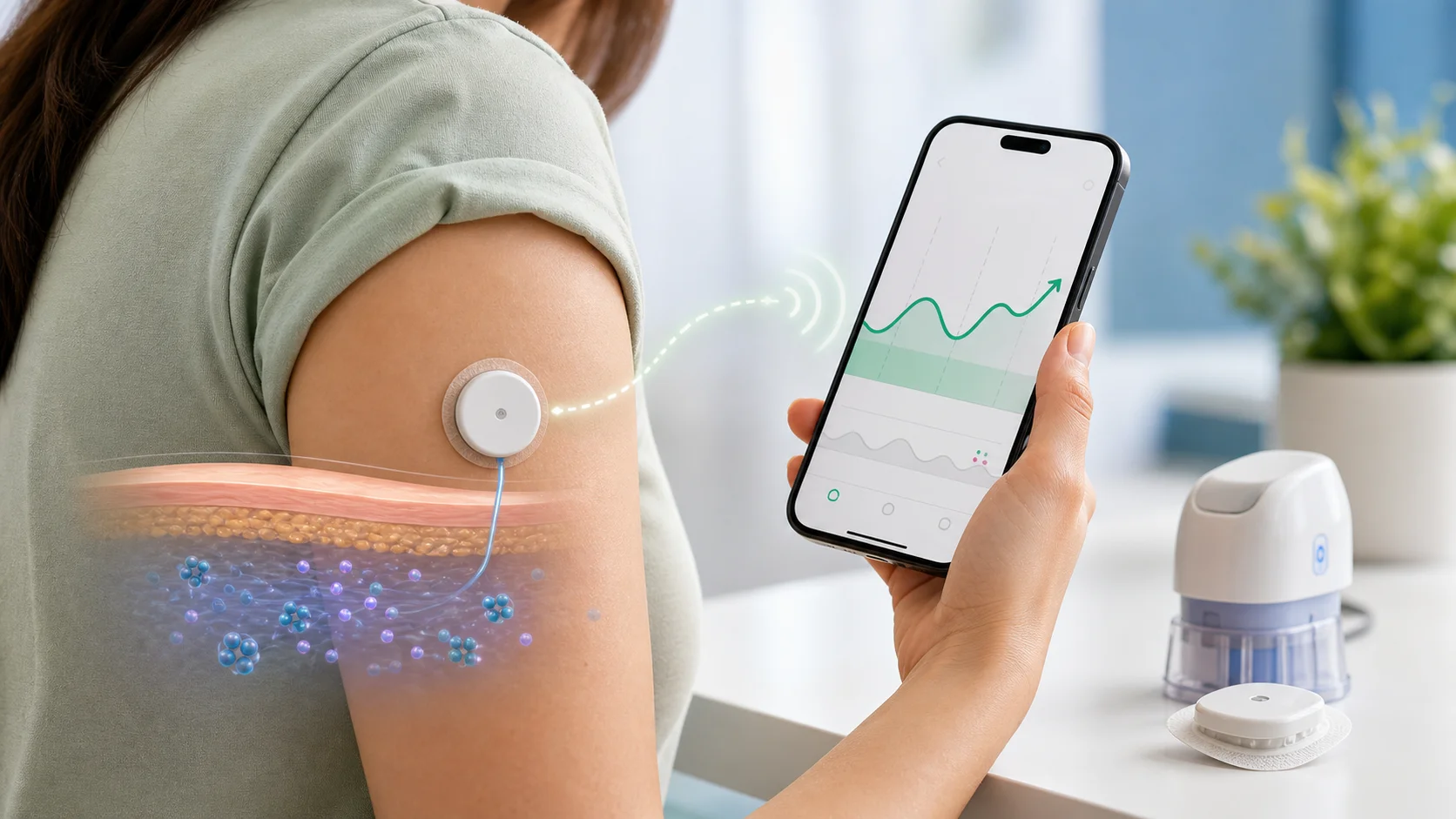
A CGM glucose sensor repeatedly estimates glucose in interstitial fluid through a filament inserted beneath the skin. It can reduce repeated finger pricks but does not remove the need for a meter in your monitoring plan.
CGM’s practical value is the context between spot tests: direction of change, overnight patterns and responses to daily activities. Learn to interpret these data with your care team.
How a glucose sensor works - step by step
Understanding how a glucose sensor works is essential to appreciate the advantages it offers. The process involves three main components that work together.
Sensor filament - the "antenna" in the skin
Skin-worn sensors use a thin filament reaching the tissue beneath the skin. Filament length and insertion mechanism vary; devices do not all share the same construction.
In electrochemical sensors, glucose reacting at the sensing surface generates a signal that the device processes to estimate concentration. This description does not apply identically to every technology, including implantable devices.
The transmitter - the data interpreter
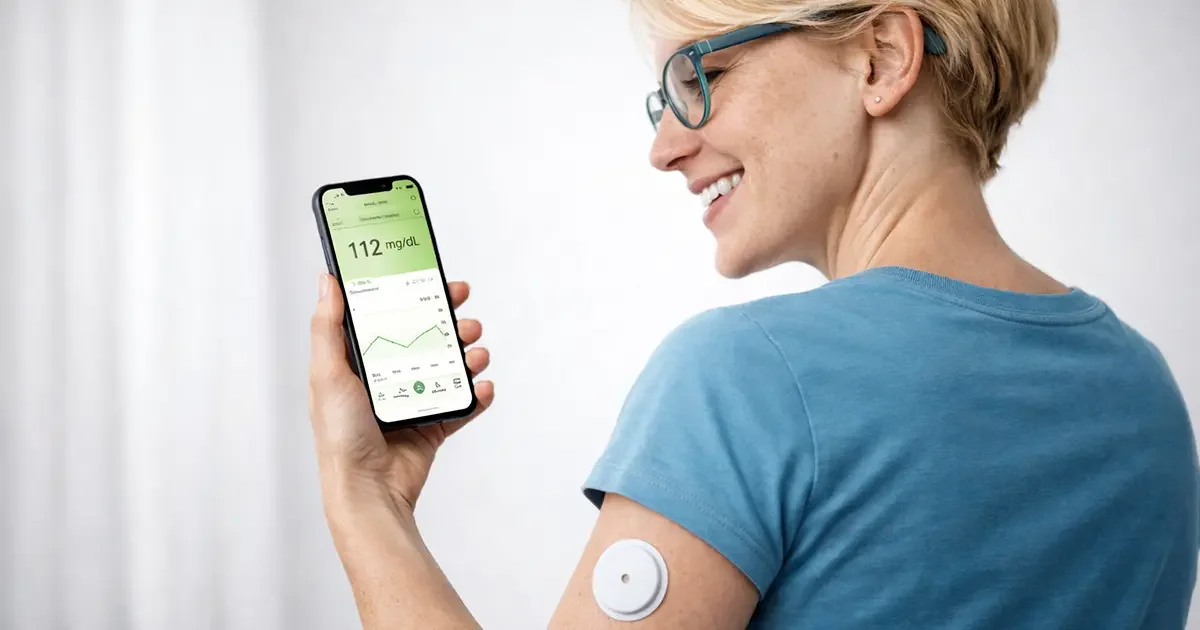
Sensor electronics process the signal and send data to a compatible app or reader. Bluetooth, NFC and watch display depend on the model; a watch displaying CGM data is not itself measuring glucose.
For models with 1–5-minute intervals, a complete day can contain 288–1440 readings. Actual totals depend on the model, connection and data availability. Finger-stick frequency is planned individually.
The app or reader - data visualization
The data arrives in the mobile app or on the dedicated reader, where it is displayed as a continuous graph. This visualization - called the "glucose profile" - shows not just the current glucose value, but also the trend: whether glucose is rising, falling, or stable. A trend arrow indicates the direction, giving you the ability to act preventively.
What does a glucose sensor actually measure?
CGM estimates interstitial glucose rather than directly measuring a blood sample. The compartments have a variable lag, particularly noticeable when glucose rises or falls quickly.
Algorithms process the signal but do not guarantee agreement with a meter or suitability for every decision. If symptoms do not match, check with a meter and follow the device instructions.
However, there are situations where the difference can be greater: during severe hypoglycemia, after carbohydrate-rich meals (when blood glucose rises rapidly), or during intense physical exercise. In these moments, if there is doubt, verification with a traditional glucometer is recommended.
Types of CGM sensors available
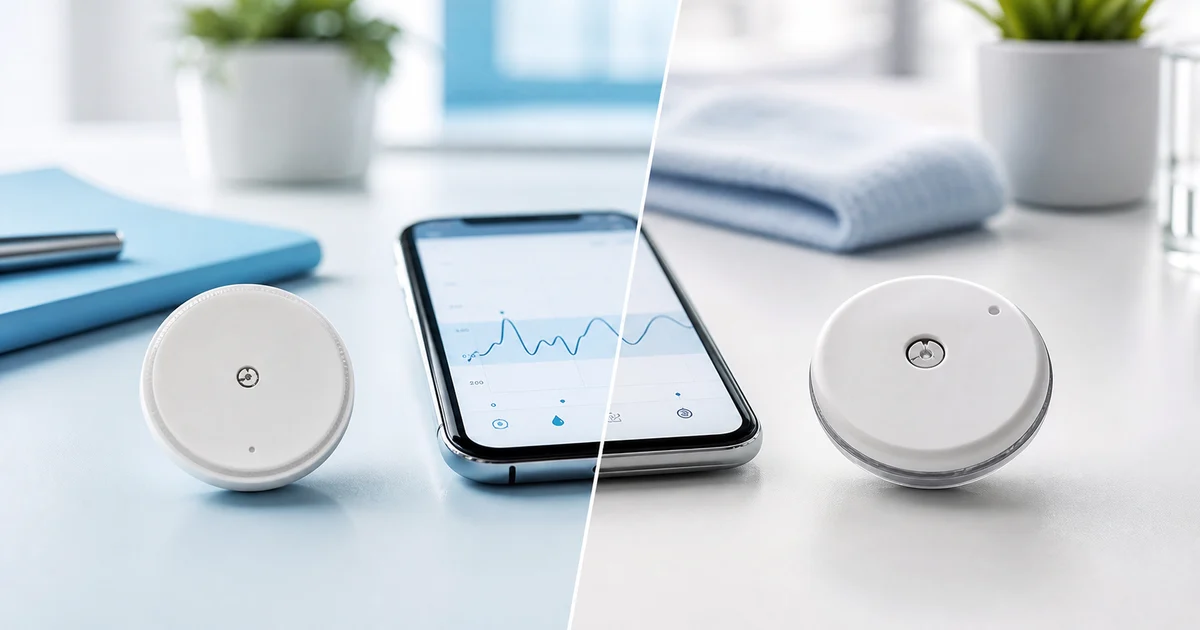
There are several types of CGM sensors on the market, classified according to the method of data transmission and the features offered.
Real-time CGM sensors (rtCGM)
Real-time sensors transmit readings automatically and may provide trends and alerts. Receiving warnings requires the settings and connection specified by the system; selection depends on indication and user needs.
CGM sensors with scanning (isCGM / Flash)
Scanned models require a compatible reader or phone to be brought close for certain data. Alerts, memory and scanning requirements differ across generations and apps; check the exact version, not just the product family.
Implantable CGM sensors
Implantable sensors are inserted and removed through a medical procedure. They can last longer than skin-worn sensors, but availability, indications and maintenance need checking for the specific device and country.
Why is a glucose sensor important for people with diabetes
The benefits of using a glucose sensor far exceed mere convenience. Clinical studies have demonstrated multiple measurable advantages.
HbA1c reduction
CGM can help improve HbA1c alongside education and appropriate treatment. Effects vary with study population, baseline levels and device use; a fixed reduction or individual reduction in complication risk cannot be promised.
Reduction of hypoglycemia
Readings and alerts can help identify lows and reduce exposure to hypoglycaemia. Not every device has predictive alerts, and no system guarantees detection or prevention of every episode.
Improved quality of life
Fewer finger-stick tests and access to trends can make daily care easier. For other users, alerts or adhesive may be troublesome; comfort and effects on sleep are individual.
Type 2 diabetes affects millions of Romanians, and continuous monitoring is becoming an increasingly recommended tool for this patient group as well, not just for those with type 1 diabetes.
Components of a CGM sensor - what is included in the kit
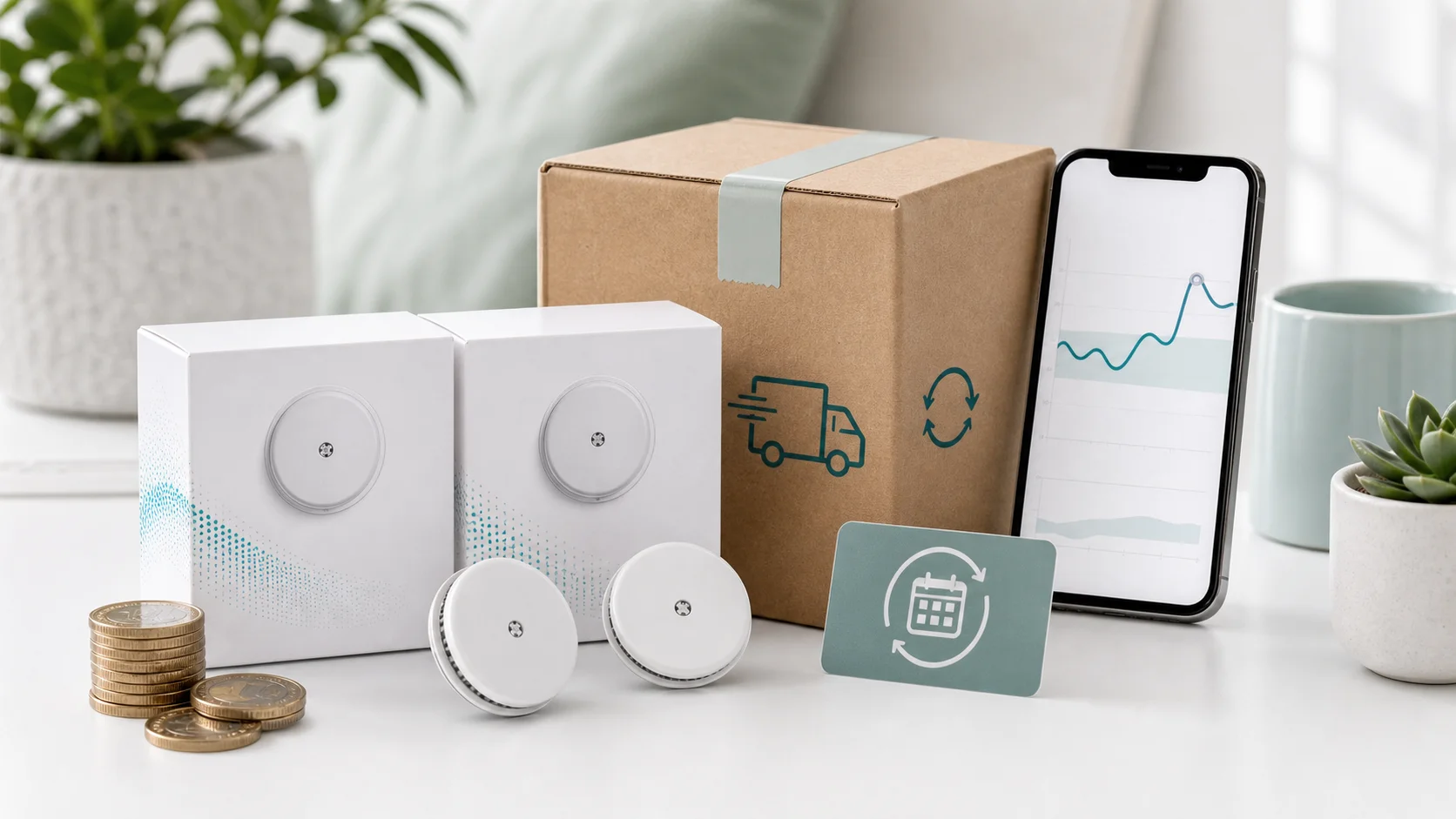
When you purchase a glucose sensor, the package typically contains the following components:
The sensor itself - the small, round or oval disc that attaches to the skin. It contains the sensor filament, electronic transmitter, battery, and medical adhesive.
The applicator inserts the filament following the manual’s steps. It may feel like pressure or a prick; painless insertion is not guaranteed.
Medical adhesive holds the device on the skin. Skin reactions can occur; limits for water, temperature and activity are those in the model’s manual.
Where to apply the glucose sensor on the body
Correct sensor placement is important for reading accuracy. The most common application areas are:
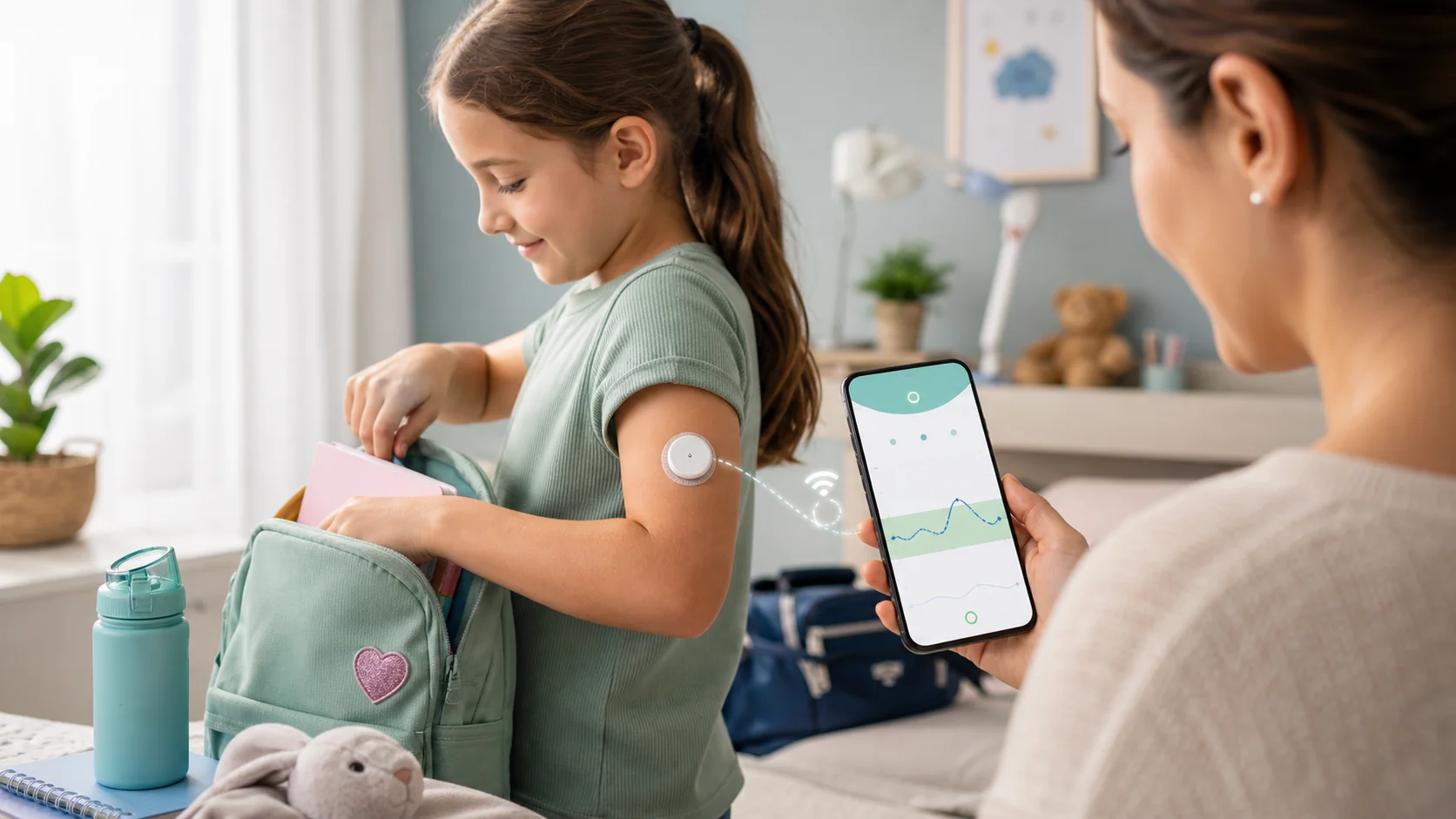
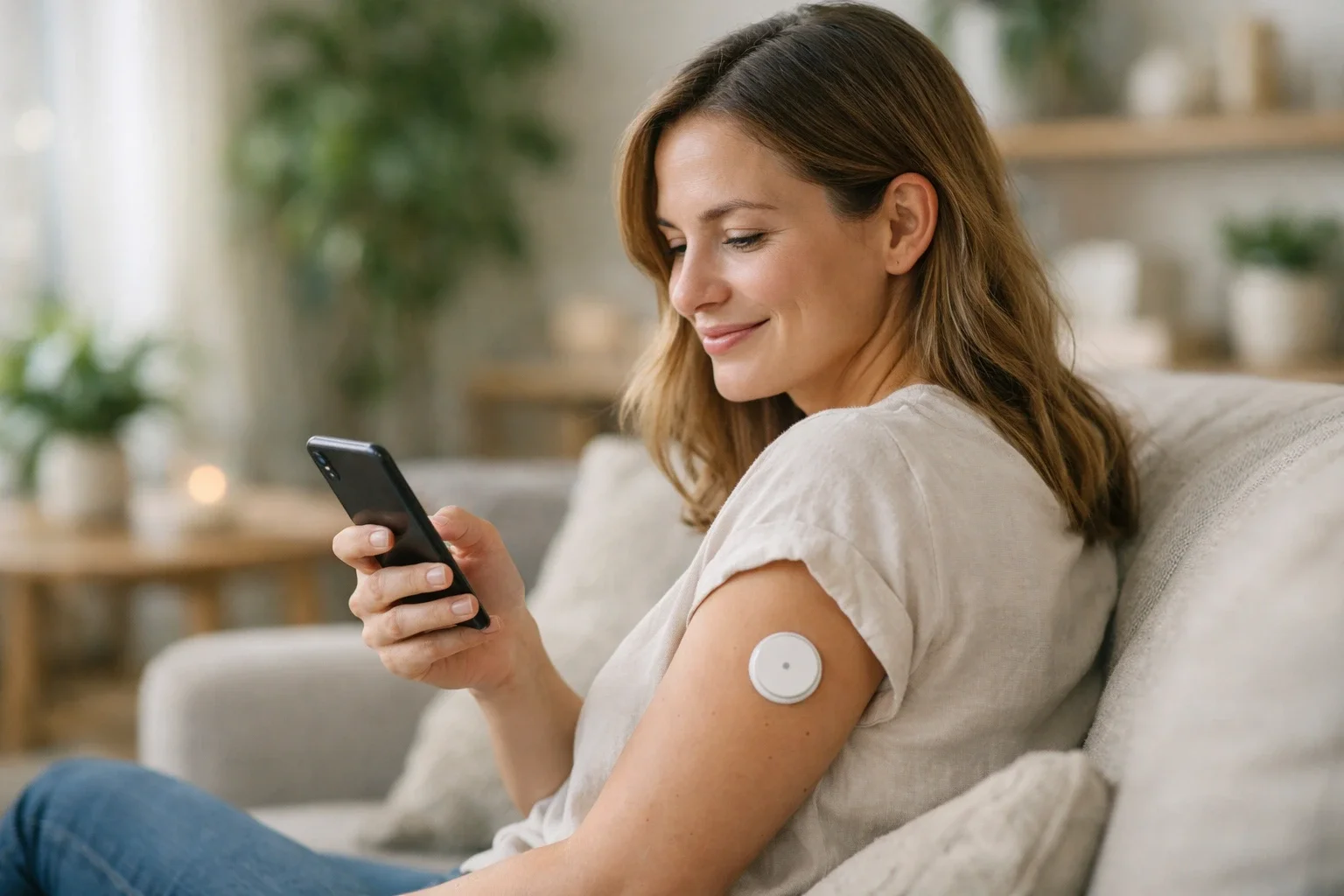
The back of the upper arm is indicated for some models and age groups. Check the product diagram and instructions rather than a generic rule.
The abdomen is permitted only for devices and ages specified in the manual. Follow its distances from the navel, injection sites and areas of friction.
The thigh should not be treated as a default alternative for children or sport. Use it only if the exact manual approves it for the user.
It is important to alternate application areas from one sensor to the next to allow the skin to rest and to avoid irritation.
How long does a glucose sensor last?
The lifespan of a glucose sensor varies depending on the manufacturer and model. The most common durations are:
7 days - for some basic models or for sensors used with insulin pumps.
14 days - for example GS1 and Accu-Chek SmartGuide. Two wear periods cover 28 days, not a whole calendar month.
15 or 21 days - LinX and iCan i3 have 15 days, while Connect 21 has 21 days. Use the exact model’s duration when planning supplies.
Replace the sensor at the manual’s specified time or earlier when instructed or necessary. Do not attempt to extend operation beyond its approved wear period.
Glucose sensor vs. traditional glucometer
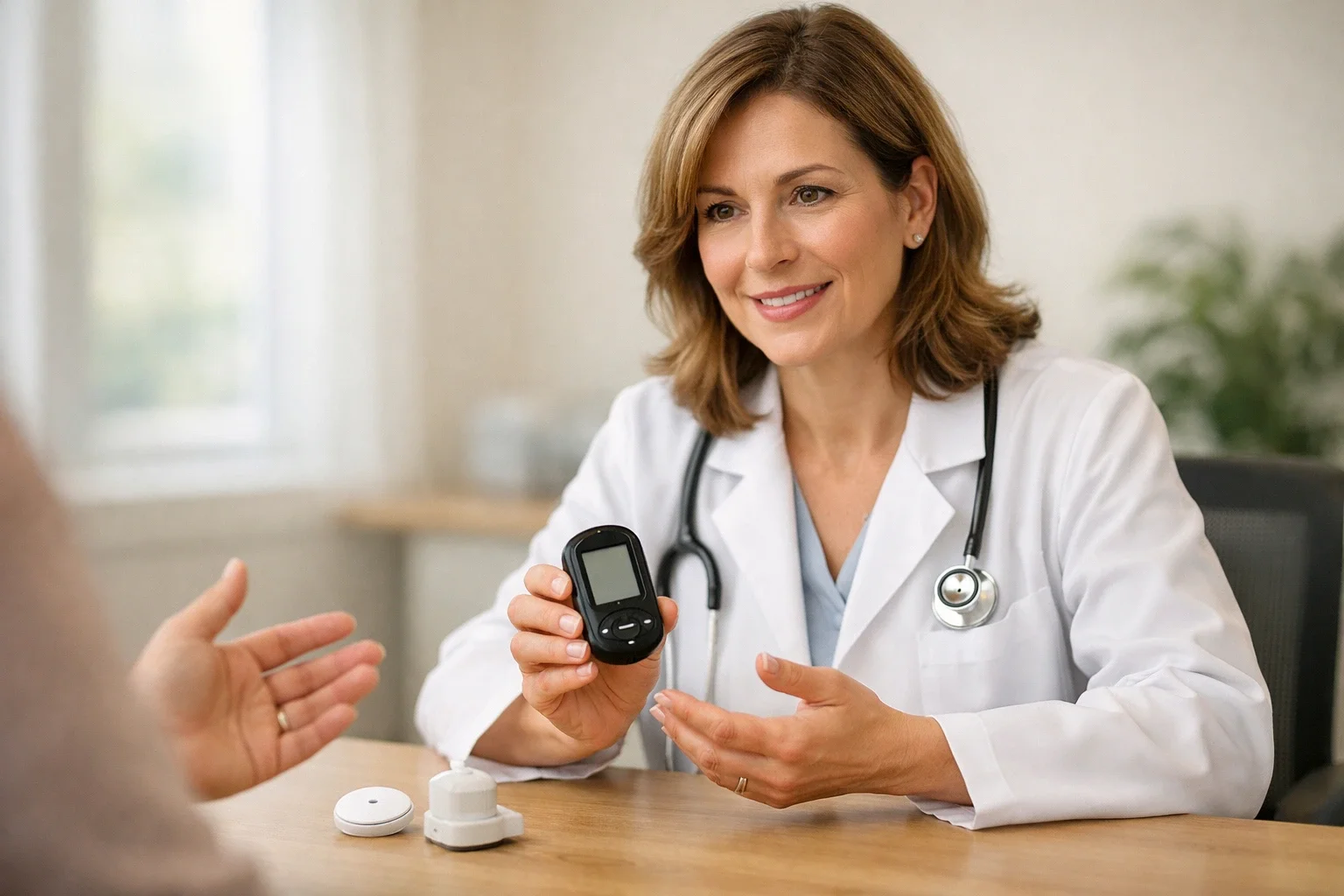
Is CGM worthwhile compared with meter-only testing? The answer depends on treatment, risk, preferences and budget. The two tools remain complementary.
A meter shows a test result at a particular time. CGM adds readings between these points and may reveal overnight or after-meal patterns when data are available and interpretable.
CGM can reduce repeated finger-stick tests but still requires insertion, setup and checks. Wear duration is model-specific, and a meter should remain available.
A meter is needed when CGM provides no usable data, during warm-up, when symptoms do not match, or when the manual requires confirmation or calibration. Accu-Chek SmartGuide is a current example requiring calibration. In an emergency, follow your care plan and seek help promptly.
Who should use a glucose sensor?
Initially, CGM sensors were recommended exclusively for people with type 1 diabetes. Today, the indications have expanded considerably:
Type 1 diabetes - ADA guidance recommends CGM with insulin therapy, supported by training and individual device selection.
People with type 2 diabetes on insulin - proven benefits in optimizing insulin doses and reducing hypoglycemia.
People with type 2 diabetes without insulin - recent studies demonstrate benefits in changing eating behavior and increasing motivation for a healthy lifestyle.
Diabetes in pregnancy - assess CGM usefulness and device indication with the care team. Evidence and recommendations are not identical for type 1, type 2 and gestational diabetes.
Prediabetes - CGM is not a diagnostic test or a requirement for everyone. Any educational use should be discussed individually without replacing recommended investigations and care.
If you want to explore available options, you can consult our guide on how to apply a CGM sensor to see how simple the process is.
Accuracy of glucose sensors - MARD explained
MARD is the mean absolute relative difference between sensor readings and the reference method in a study. The result depends on study design as well as the device.
A MARD of 10% does not mean every reading lies within ±10% or guarantee 90–110 mg/dL when the reference is 100. Comparing products requires comparable study methods and assessment at low glucose, not just one percentage.
Differences may arise during rapid glucose changes, pressure on the sensor or model-specific interferences. Read the manual’s list of medicines and conditions; do not automatically ignore a suspicious first-day reading.