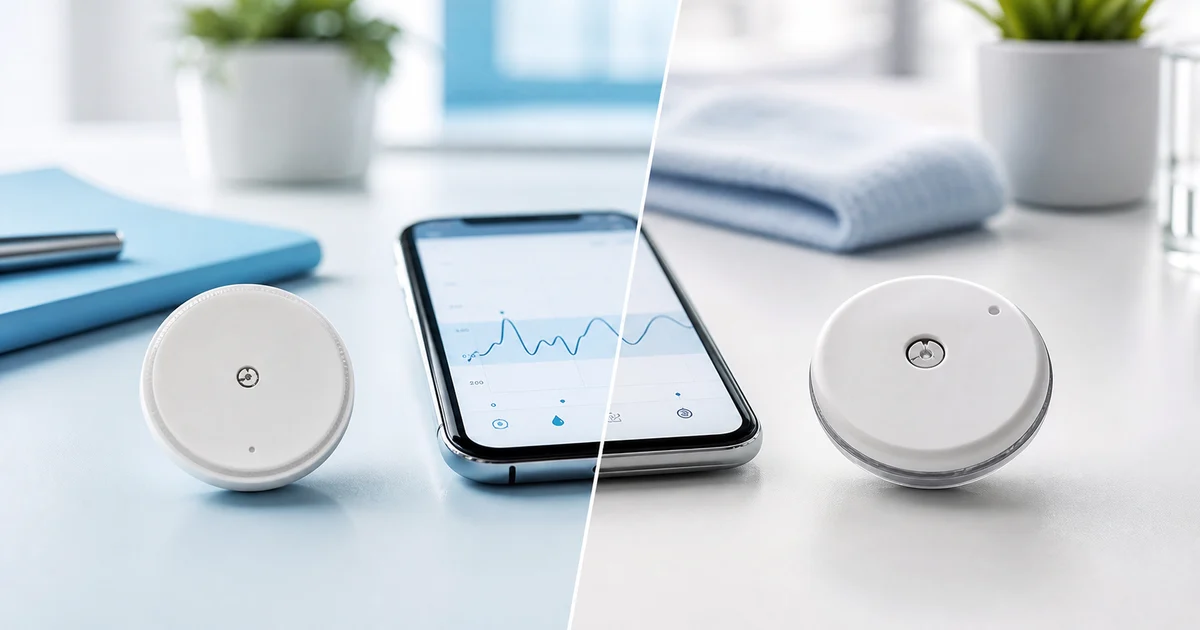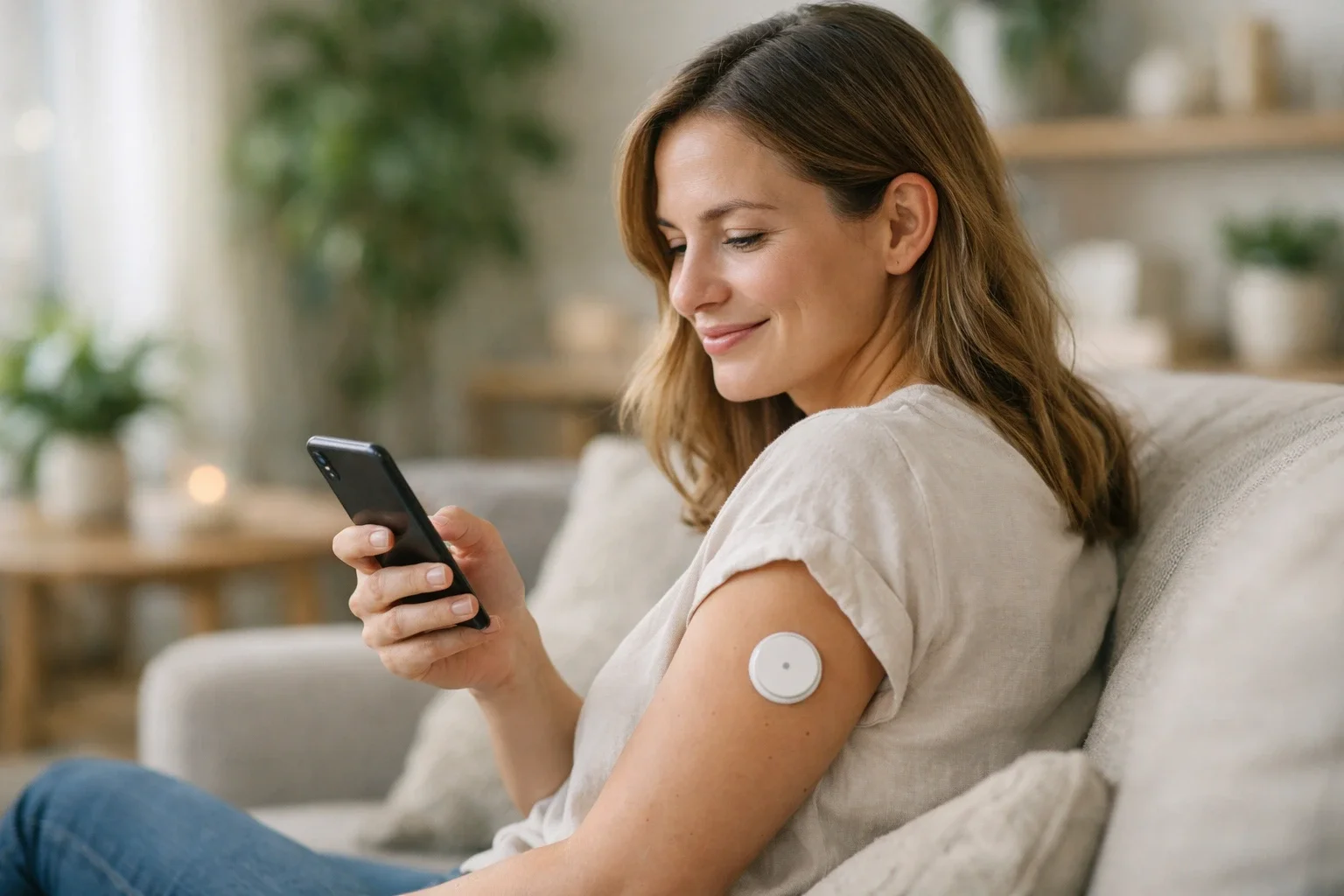
Sibionics GS1 vs GS3 — a documented comparison
“GS1 or GS3?” involves two questions: what differences the manufacturer describes, and which product you can buy with appropriate documentation and support. A newer generation is not automatically better for every person.
GS1 and GS3 are part of the SIBIONICS portfolio. The GS3 references below come from the international product page, not verification of a local batch. Prime Medical has no confirmed GS3 restocking date. Check stock before planning your monitoring around a model.
Comparison table: specifications and limitations
| Criterion | Sibionics GS1 | Sibionics GS3 |
|---|---|---|
| Documentation | Country- and version-specific GS1 manual | International page; confirm the local batch manual |
| Declared wear | Up to 14 days | 14 days on the international page |
| Accuracy | Not ranked by MARD alone | No shared head-to-head test establishing superiority |
| Profile | Check the version’s dimensions | Manufacturer lists 2.9 mm |
| Water use | IP28; limits in the manual | Confirm local-version conditions |
| Bluetooth | Follow distance and obstacle guidance | Do not assume twice the GS1 range |
| Calibration and checks | No routine calibration; check when instructed | Follow the version’s manual rather than assumptions from GS1 |
| Conformity | Check the declaration for the exact product | Check the declaration and local indications |
| App | SIBIONICS, subject to compatibility | Confirm app version and history transfer |
| Price and stock | See product page | No confirmed Prime Medical restocking date |
Thickness and comfort: what size tells you
The international SIBIONICS page describes GS3 as 2.9 mm thick. This is a size specification, not a promise that it will be invisible or unnoticeable. For a precise GS1 comparison, use both versions’ specifications rather than rounded advertising figures.
Comfort also depends on adhesive, skin, permitted application site and clothing. With close-fitting clothing or exercise, consider where friction occurs and whether a permitted application site suits your routine.
If skin-worn devices bother you, ask about dimensions and placement before switching. A thinner profile does not rule out irritation or guarantee better attachment.
Water resistance: IP28 is not splash-only
GS1 is rated IP28 and its manufacturer describes showering and swimming within specified limits. Describing that rating as “splash-only” is incorrect.
A change from IP28 to IP38 on a specification sheet would not automatically demonstrate better water protection: the first digit describes a different protection category. For GS3, obtain the exact manual before adopting conditions from an international page or GS1 documents.
Depth, duration, temperature and attachment matter. See LinX CGM vs GS1 for that comparison; IP68 is not permission for unlimited immersion either.
Bluetooth: a stated range does not guarantee coverage at home
The international GS3 page recommends keeping the phone within 6 metres, without obstacles. This is an operating condition, not guaranteed reception through walls or between floors. Check whether the version you buy specifies the same limits.
In practice, check the following:
- For GS1: keep the phone as instructed, with Bluetooth and necessary permissions enabled.
- For GS3: check the same requirements and do not assume walls or furniture are included in a stated range.
Connection loss may delay readings or alerts. Data sharing is not continuous professional medical supervision.
Accuracy: no winner inferred from MARD
Commercial MARD figures need the study population and protocol. A result from a paediatric study and one from adults are not a direct comparison between sensors.
The cited data do not establish clinical superiority of either model. Your choice also needs to consider performance at low glucose, available alerts and situations requiring confirmation. Changing sensors is not a reason to adjust insulin doses on your own.
CE marking and the conformity declaration matter for the exact product, but are not a performance ranking. When readings do not match symptoms, use a meter as instructed by the manual and care plan.
The app: check version and history before switching
GS1 uses the SIBIONICS app, and the international GS3 page describes the same ecosystem. That does not establish identical features across every country and software version.
Before switching, check phone compatibility, app version, activation, sharing and historical-data retention. Automatic history transfer is not promised without compatibility confirmation for your setup.
Wear duration and the role of the meter
The manufacturer describes up to 14 days for GS1 and 14 days on the international GS3 page. Check the authorised duration in the supplied manual and do not extend it. “No routine calibration” does not mean “never any fingersticks”: confirmation may be needed when readings do not match how you feel or usable data are unavailable.
Price: compare actual offers, not assumed positioning
Check GS1 pricing and availability on its product page. An older model is not automatically cheaper.
With no confirmed GS3 restocking date, an historical price is not an offer on which to base today’s budget. We do not justify an assumed premium using features unverified for a local batch.
For 365 days, 26 fourteen-day sensors cover only 364 days; starting without stock, the rounded-up count is 27. The cost guide explains the assumptions and distinguishes average cost from the checkout amount.
Choosing for your circumstances
Your first CGM
Start with medical indications, your phone and the training needed. Availability and access to a manual matter more than the label “new”. We do not call GS1 universally safer.
You already use GS1
Write down what you want to improve: adhesive, size, alerts or the app. Ask about those needs before switching; do not assume GS3 automatically solves them.
You exercise
Check placement, friction, water and attachment for your activity. A thinner profile does not guarantee the sensor will stay attached.
Budget matters most
Compare daily costs, supplies and availability. Check LinX, Connect 21, iCan i3 and SmartGuide in the sensor category as alternatives, without disregarding medical indications.
Conclusion: documentation, compatibility and availability
GS1 has documented features to compare with your needs. GS3 has manufacturer-declared differences, but we do not turn them into a clinical victory or predict local availability.
Before ordering, confirm the exact model, manual, phone, app and warranty terms. If you have a medical monitoring need, do not delay it solely to await a product without a restocking date; discuss available options with your diabetes team.
Continue with the practical model comparison, LinX–GS1 or choosing your first CGM.