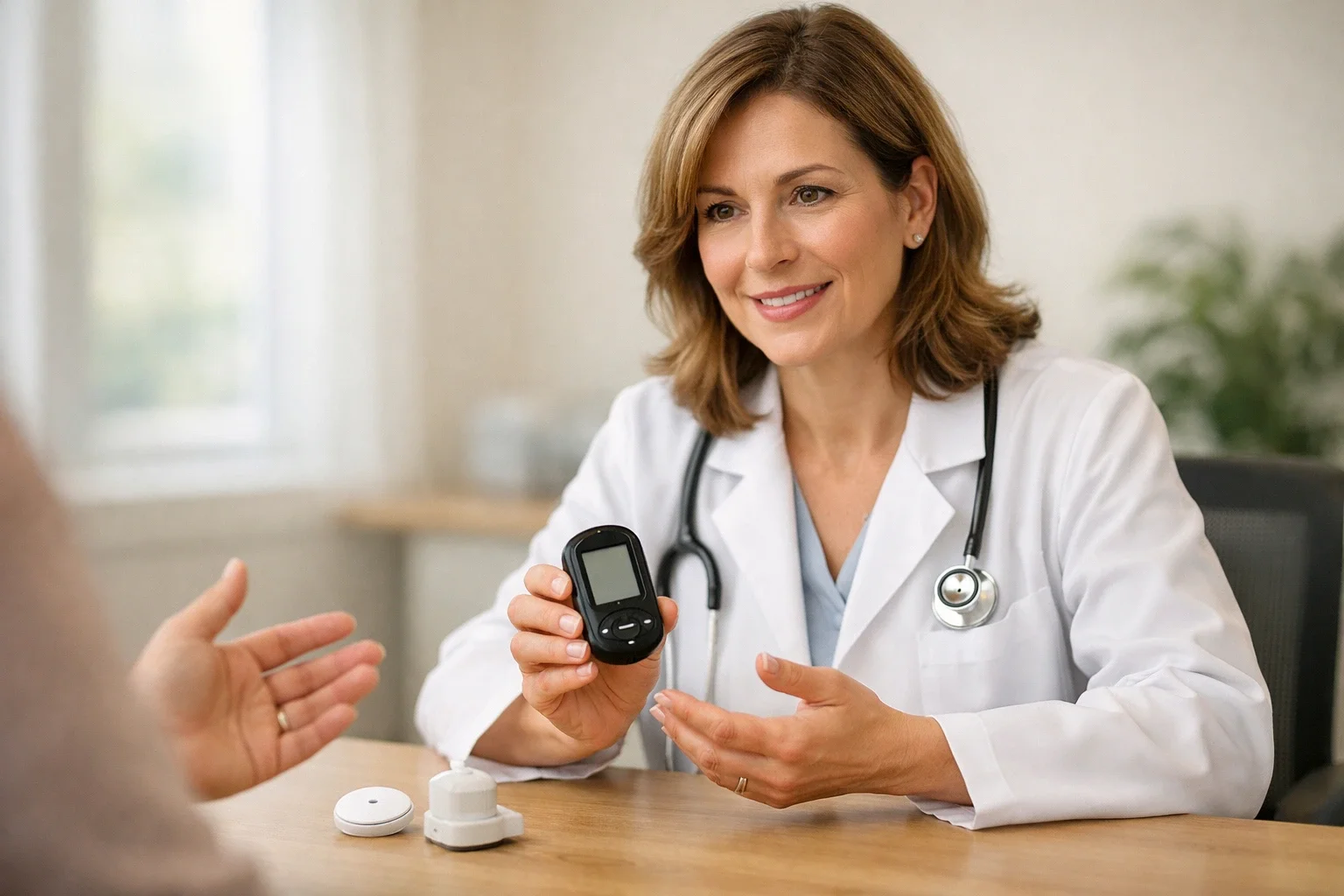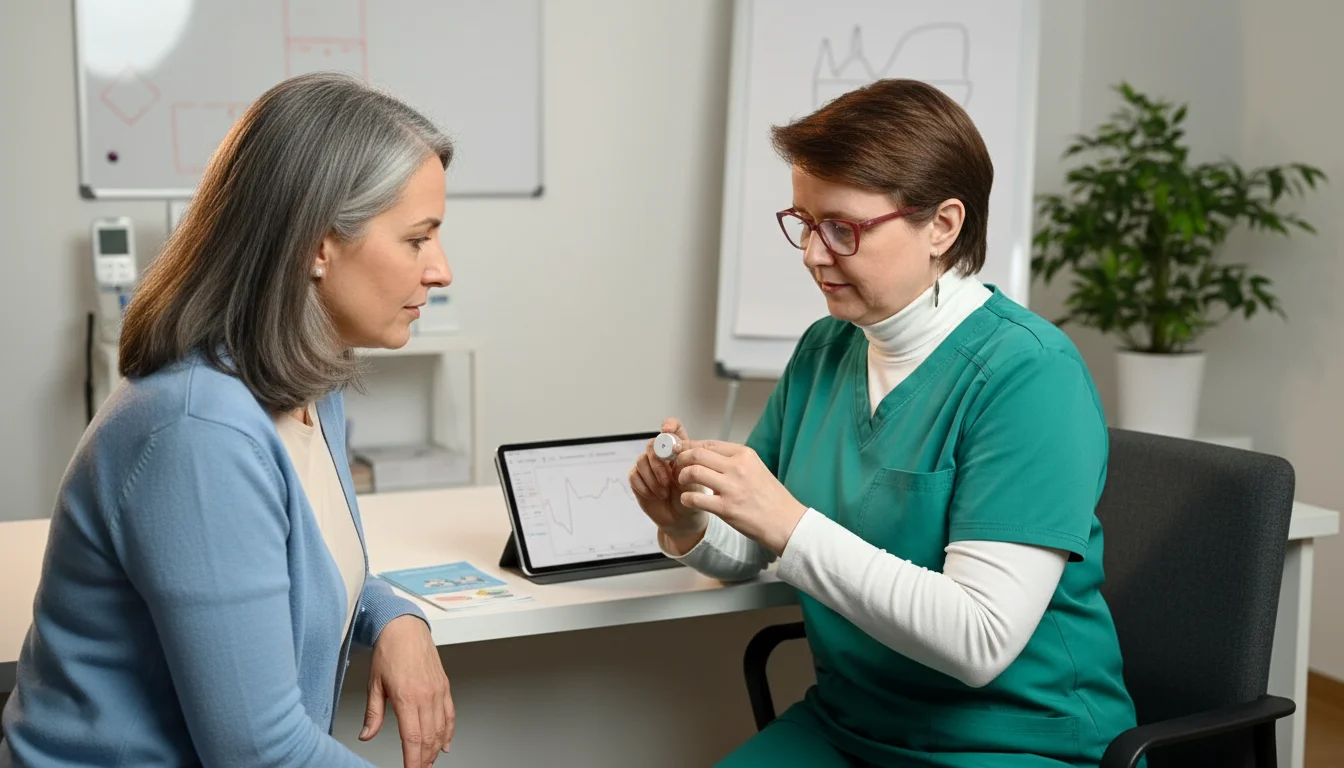
Blood glucose monitoring is essential for anyone living with diabetes - but the method you use matters enormously. CGM glucose sensors (Continuous Glucose Monitoring) have revolutionized diabetes management, eliminating the need for repeated finger pricks and providing a complete picture of blood glucose throughout the entire day. This guide, prepared by Dr. Daniela Petrache in collaboration with Prime Medical, presents the 5 CGM sensors available on our platform - with technical specifications, detailed comparisons, and recommendations to help you choose the sensor that fits your needs.
What are CGM glucose sensors?
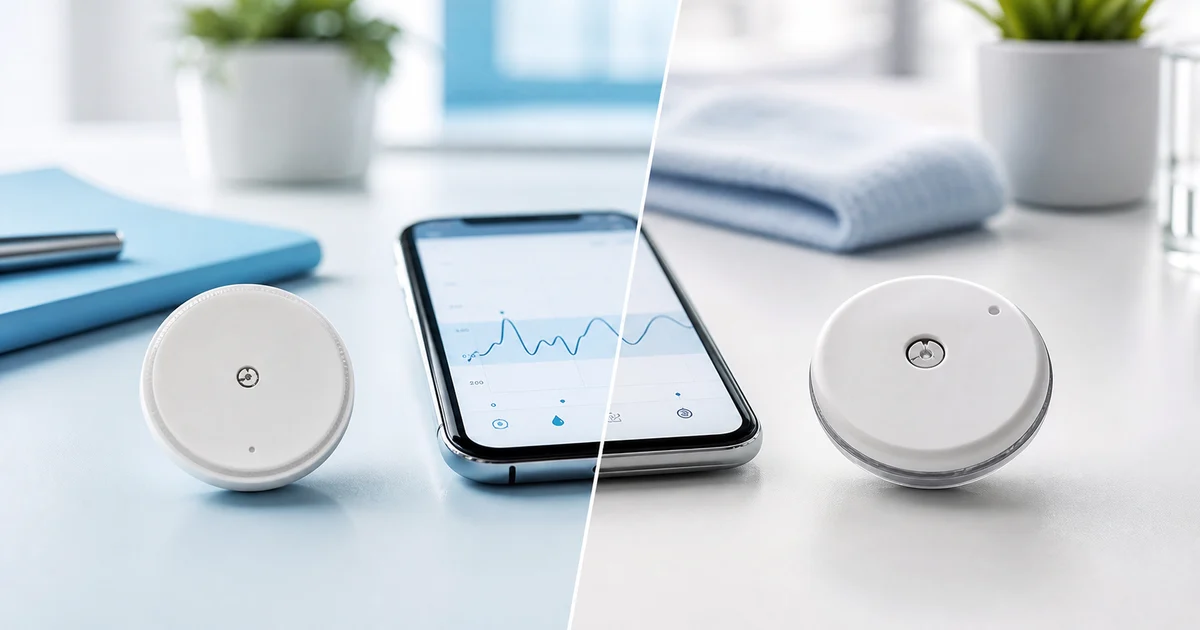
A CGM glucose sensor (Continuous Glucose Monitoring) is a small medical device applied to the skin that automatically measures glucose levels in interstitial fluid at regular intervals of 1-5 minutes. Unlike traditional glucometers, which provide a single value at the time of testing, a CGM sensor builds a complete glucose profile over 24 hours.
The components of a CGM system are:
The sensor (filament) - a thin, flexible wire inserted under the skin (typically on the back of the arm) that detects glucose concentration in interstitial fluid
The transmitter - an electronic component integrated or attached to the sensor that wirelessly sends data (Bluetooth) to a receiver
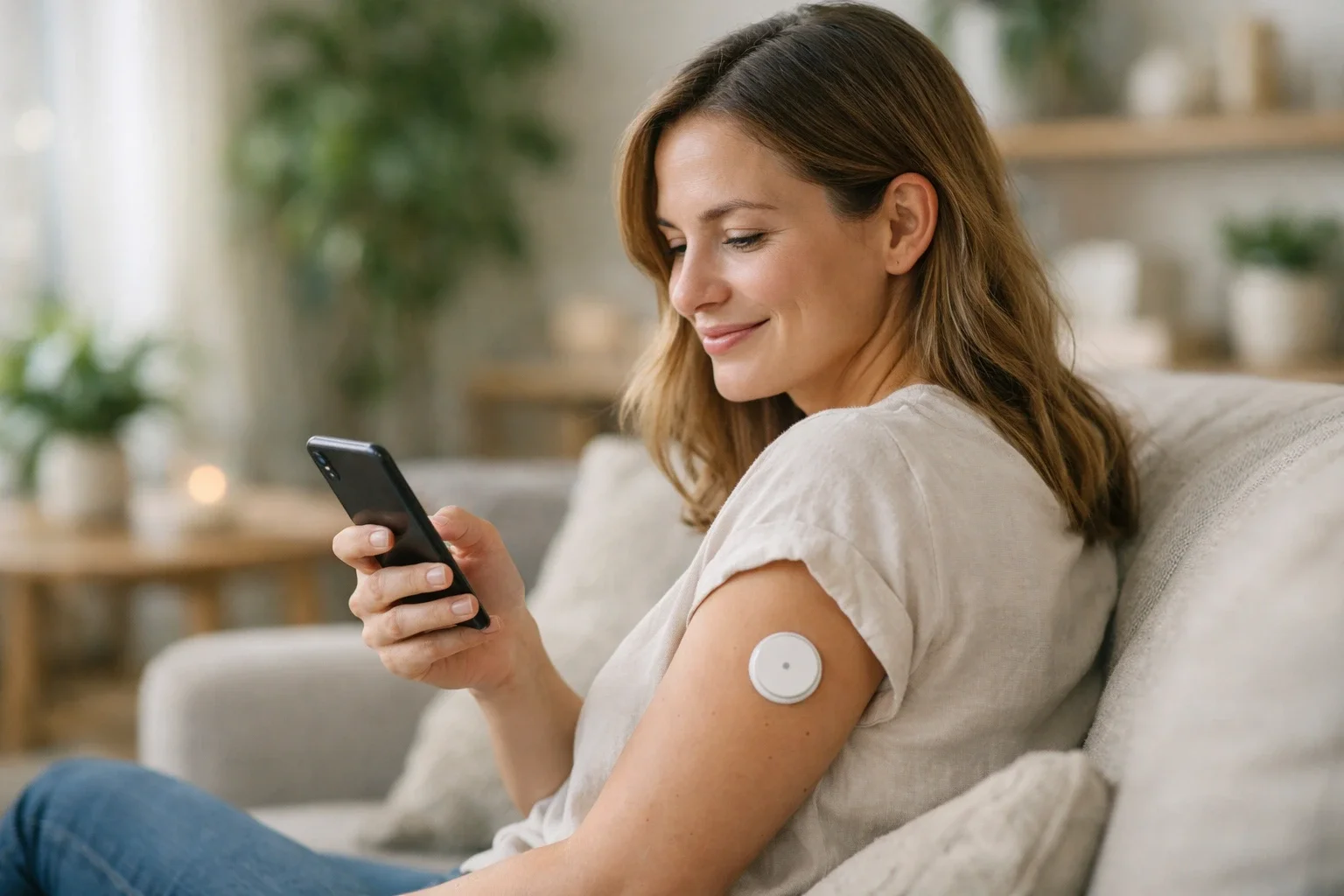
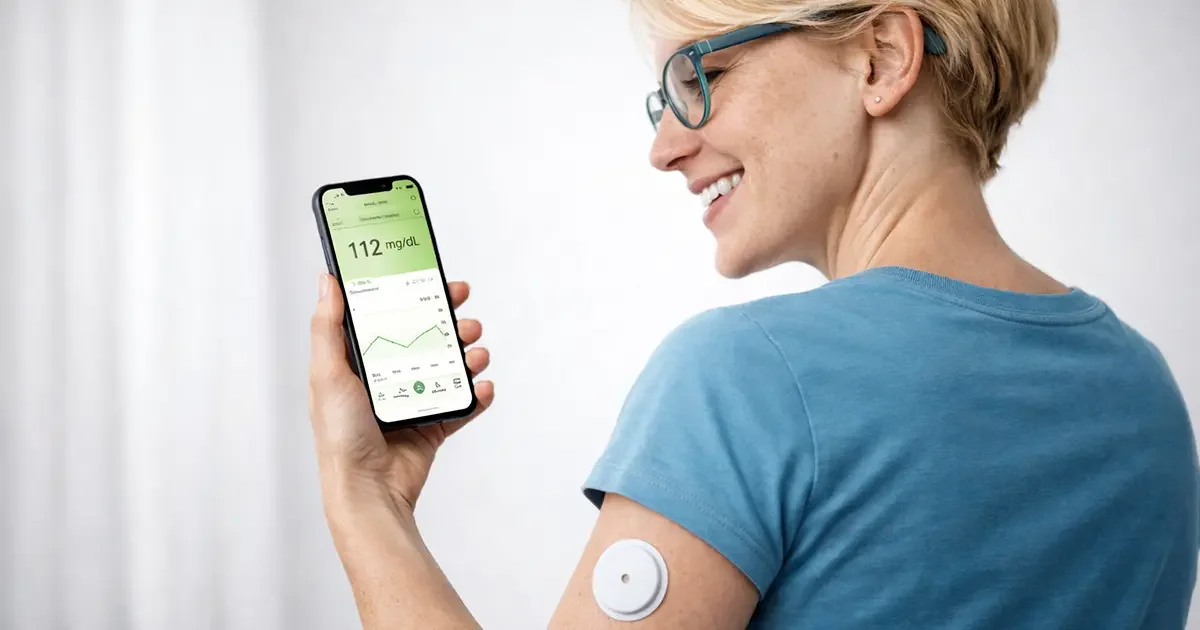
Mobile application - installed on a smartphone, displays real-time values, graphs, trends (directional arrows), hypoglycemia and hyperglycemia alerts, plus AGP (Ambulatory Glucose Profile) reports
CGM values have a physiological lag of 5-15 minutes compared to capillary blood glucose (from the finger), because the sensor measures interstitial glucose, not blood glucose. However, the accuracy of modern sensors (expressed as MARD - Mean Absolute Relative Difference) has reached below 9%, making them reliable for daily therapeutic decisions, including insulin dose adjustments.
Did you know? According to ADA Standards of Care 2026, CGM sensor use is associated with HbA1c reduction of 0.3-0.5%, increased time in range with 1.5-2.5 hours/day, and significant reduction in hypoglycemic episodes. Over 5 million people worldwide currently use CGM.
HOW A CGM SENSOR WORKS①The SensorThin filament under skin detects glucose from interstitial fluidEvery 5 min②The TransmitterElectronic component sends data wirelessly via BluetoothBluetooth BLE③Mobile ApplicationReal-time graphs, trends, alerts and detailed AGP reports288 readings/dayTIR 70%+ • Glucose Control HbA1c ↓ • Hypo ↓ • Variability ↓MARD accuracy below 9% · No calibration · No daily finger pricksSource: ADA Standards of Care 2026 · Prime Medical
Why choose a CGM sensor over a traditional glucometer?
The traditional glucometer was for decades the only instrument available for self-monitoring blood glucose. However, its limitations are significant: it provides only point values, requires repeated finger pricks (4-8 times per day), and cannot detect nocturnal glucose variations or rapid rise/fall trends.
CGM sensors eliminate these limitations by offering:
Continuous, 24/7 monitoring - including at night, when hypoglycemia is most dangerous
288 automatic measurements per day - compared to 4-8 with a glucometer
Real-time alerts - the sensor warns you BEFORE glucose reaches critical values, based on trend
Graphs and AGP reports - complete visualization of glucose control, useful for medical consultations
Comfort and discretion - the sensor is applied once every 14-15 days, without daily pain
Data sharing - you can send real-time values to family or your doctor
TRADITIONAL GLUCOMETER vs CGM SENSORTRADDITIONAL GLUCOMETER✗ Finger prick at each test✗ Single value per measurement✗ Does not detect nocturnal hypo/hyper✗ 4-8 tests/day recommended✗ No trends or graphs✗ No automatic alerts✗ Consumable costs (tests+lancets)Max ~8 measurements / dayCGM SENSOR✓ No finger pricks - applied once every 14-15 days✓ Continuous readings every 5 minutes✓ 24/7 monitoring, including at night✓ 288 automatic measurements per day✓ Graphs, trends, AGP reports✓ Hypo/hyper alerts in real time✓ Predictable cost: 1-2 sensors/month288 measurements / day (×36 more)Source: ADA Standards of Care 2026 · primemedical.ro
According to clinical studies, people who switch from glucometer to CGM show an average increase in Time in Range of 1.5-2.5 hours per day and a reduction in hypoglycemic episodes of 50-70%. These benefits are confirmed for both type 1 and type 2 diabetes.
The 5 CGM sensors available on Prime Medical
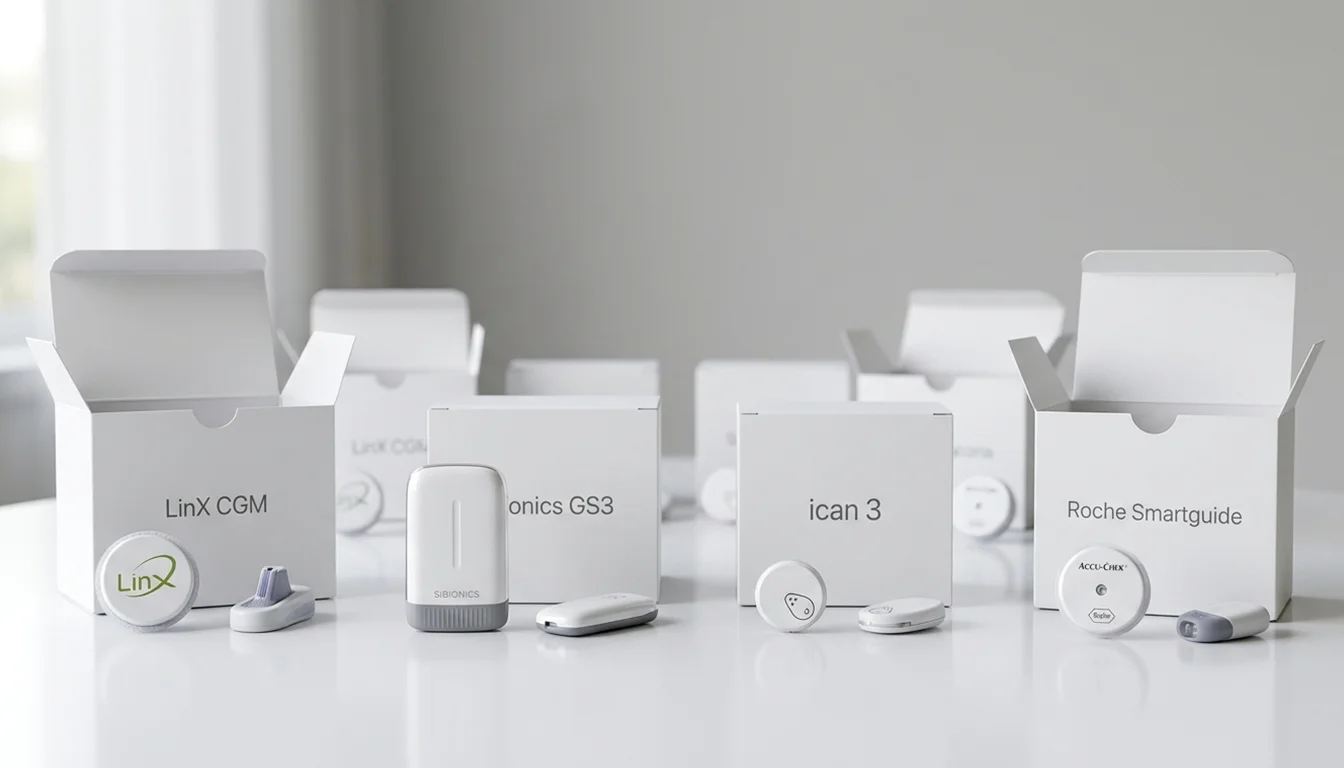
On our platform you will find 5 models of CGM sensors, each with specific advantages. All have CE certification, Bluetooth connectivity, and dedicated mobile applications.
THE 5 CGM SENSORS - OVERVIEW LinX CGM225 lei15 days autonomyMARD 8.66%IP68 (swimming)22 mm · 2.16 g★ BEST PRICEMost accurateMost discreteMost resistantSinocare i3289 lei15 days autonomyMARD 8.71%IP28BluetoothExcellent accuracyIntuitive appCompetitive priceSibionics GS1320 lei14 days autonomyMARD 8.83%IP2833.5 mm · 3.84 gDiscrete designDetailed reportsEasy sharingSibionics GS3369 lei14 days autonomyMARD 8.7%Water resistantCompactAdvanced accuracyCustom alertsCE certificationAccu-Chek375 leiRoche14 days autonomyWater resistantBluetoothEstablished brandAdvanced predictionInsulin+lifestylePrices updated March 2026 · All with CE certification · primemedical.ro
1. LinX CGM - Glucose Sensor
LinX CGM from MicroTech Medical is the sensor with the best value for money in our range. With a MARD of 8.66% (the most accurate in the range), 15 days autonomy, and IP68 certification (allows swimming), LinX CGM offers top performance at an affordable price of 225 lei (promotional price). It is also the smallest (22 mm) and lightest (2.16 g) sensor available, making it extremely discreet under clothing.
2. Sinocare iCan i3 - Glucose Sensor
Sinocare iCan i3 offers excellent accuracy (MARD 8.71%) and 15 days of autonomy. The Sinocare application is intuitive and offers detailed graphs, exportable reports, and the ability to share with your doctor. The price of 289 lei (promotional price) makes it a competitive choice. IP28 protection - resistant to splashing and shower.
3. Sibionics GS1 - Glucose Sensor
Sibionics GS1 is a sensor with compact design (33.5 mm, 3.84 g) and 14 days of continuous monitoring. With a MARD of 8.83%, it offers solid clinical accuracy. The Sibionics application allows detailed reports and data sharing with up to 10 people. Price: 320 lei.
4. Sibionics GS3 - Glucose Sensor
Sibionics GS3 is the advanced model in the Sibionics range, with a MARD of 8.7%, customizable alerts, and 14 days of autonomy. It offers advanced customization options for alerts and target ranges. CE certification and water-resistant design. Price: 369 lei.
5. Accu-Chek SmartGuide - Glucose Sensor
Accu-Chek SmartGuide from Roche is the only CGM sensor in the range produced by an established pharmaceutical brand with decades of experience in diabetes devices. It offers 14 days of monitoring, advanced trend prediction, and integration with the Roche ecosystem. Price: 375 lei (promotional price, from 400 lei).
Complete comparison - CGM sensors table
Feature | LinX CGM | Sinocare iCan i3 | Sibionics GS1 | Sibionics GS3 | Accu-Chek SmartGuide |
|---|---|---|---|---|---|
Price | 225 lei (promo) | 289 lei (promo) | 320 lei | 369 lei | 375 lei (promo) |
Autonomy | 15 days | 15 days | 14 days | 14 days | 14 days |
MARD | 8.66% | 8.71% | 8.83% | 8.7% | 9.2% |
Water resistance | IP68 | IP28 | IP28 | IP38 | IP28 |
Size | 22 mm | - | 33.5 mm | Compact | - |
Weight | 2.16 g | - | 3.84 g | - | - |
Calibration | Yes | No | No | No | No |
Bluetooth | Yes | Yes | Yes | Yes | Yes |
Brand | MicroTech Medical | Sinocare | Sibionics | Sibionics | Roche |
Important: All prices are updated at the date of publication of this article and may include active promotions. Check the CGM sensors page for current prices.
How to choose the right CGM sensor for you?
Choosing the right CGM sensor depends on several personal factors. Here are the main criteria to consider:
1. Budget
Prices range from 225 lei (LinX CGM on promotion) to 400 lei (Accu-Chek SmartGuide). If you use CGM continuously, the monthly cost is 1-2 sensors, so the price difference matters in the long term. For maximum savings, check the subscription plans available on Prime Medical - you get reduced prices and automatic delivery.
2. Accuracy (MARD)
MARD (Mean Absolute Relative Difference) is the gold standard for evaluating the accuracy of a CGM sensor. The lower the MARD value, the more accurate the sensor. All models available on Prime Medical have MARD below 9%, which represents an excellent level of clinical accuracy. LinX CGM leads the ranking with a MARD of 8.66%.
3. Autonomy
Sensors offer 14 or 15 days of continuous monitoring. The difference of one day may seem small, but over a year (24 vs 26 sensors) it means savings. LinX CGM and Sinocare iCan i3 offer 15 days, while Sibionics GS1/GS3 and Accu-Chek SmartGuide offer 14 days.
4. Water resistance
If you are an active person who swims or practices water sports, IP68 (LinX CGM) is the ideal choice - it allows prolonged immersion. IP28 (Sinocare, Sibionics GS1) protects against splashing and shower, but is not recommended for swimming.
5. Ecosystem and application
Each sensor uses its own mobile application. Evaluate: compatibility with your phone (iOS/Android), interface (in Romanian?), ability to share data with your doctor, and integration with other health applications.
6. Brand and trust
If you prefer an established medical brand, Accu-Chek SmartGuide from Roche has decades of experience in diabetes devices. If you prioritize value for money, LinX CGM offers the best combination of accuracy, autonomy, and price in the range.
Prime Medical Recommendation: For most users, LinX CGM offers the best balance between accuracy (MARD 8.66%), autonomy (15 days), water resistance (IP68), and price (225 lei on promotion). It is the ideal choice for both first-time CGM users and experienced ones.
How to apply a CGM sensor?
Applying a CGM sensor is simple and takes less than 2 minutes. The process is similar for all models:
Skin preparation - choose an area on the back of your arm (the most common location), clean with alcohol, and let the skin dry completely
Opening the applicator - each sensor comes with a single-use applicator, pre-prepared from the factory
Application - position the applicator perpendicular to the skin and press firmly. The filament inserts automatically under the skin in fractions of a second - most users describe the sensation as a small pinch, less painful than a traditional finger prick
Activation - open the dedicated application on your smartphone, scan the sensor (NFC or Bluetooth), and follow the activation instructions
Warm-up period - the sensor requires 30-60 minutes of stabilization before displaying the first values (varies per model)
Important: Do not apply the sensor on areas with scars, moles, stretch marks, or irritation. Rotating the application site with each new sensor prevents skin irritation. If redness or persistent discomfort occurs, consult your doctor.
Monitoring blood glucose with CGM sensors - what do the data show?
A CGM sensor generates a huge amount of data - up to 288 readings per day. Here's how to interpret the most important metrics:
Time in Range (TIR)
Time in Range represents the percentage of time your glucose is within the target range (typically 70-180 mg/dL). According to ADA 2026 guidelines, the goal is minimum 70% TIR for adults with diabetes. Each additional percentage of TIR correlates with a 0.1% reduction in HbA1c.
Glucose variability
Not only the average glucose matters, but also how much it fluctuates. A coefficient of variation (CV) below 36% indicates a stable glucose profile. CGM sensors automatically display CV in AGP reports.
AGP Graph (Ambulatory Glucose Profile)
The AGP report synthesizes CGM data over 14 days into a single standardized graph: median band, 25-75% percentiles, and 5-95%. It is the preferred tool of diabetologists for evaluating glucose control and adjusting treatment.
Frequently asked questions about CGM sensors
Can I shower or swim with the sensor?
Yes, all models are water-resistant. LinX CGM (IP68) allows swimming and prolonged immersion. Models with IP28 resist splashing and short showers, but are not recommended for pools.
Does the CGM sensor completely replace the traditional glucometer?
For most users, yes. Modern CGM sensors do not require calibration with a glucometer. However, in emergency situations or when CGM values do not match symptoms, a check with a traditional glucometer is recommended.
Can I see glucose on my smartwatch?
It depends on the sensor model and smartwatch model. Many CGM applications offer widgets or companion apps for Apple Watch and Wear OS. Check the specifications of each sensor's application.
How often does the sensor need to be changed?
Every 14 or 15 days, depending on the model. The sensor is completely replaced - the old one is removed and a new one is applied to another area of the skin.
When should you consult a doctor?
Using a CGM sensor does not replace regular medical consultations. Consult your doctor immediately if:
Severe hypoglycemia - glucose below 54 mg/dL or severe symptoms (confusion, loss of consciousness)
Persistent hyperglycemia - values over 300 mg/dL that do not drop after treatment administration
Diabetic ketoacidosis - nausea, vomiting, abdominal pain, rapid breathing - medical emergency
Major discrepancies - frequent and significant differences between CGM and glucometer values
Consult your doctor regularly for:
Interpretation of AGP reports and treatment adjustment
Evaluation of Time in Range and setting personalized goals
Selection or change of CGM sensor model
HbA1c check every 3 months
CGM sensors are a powerful tool, but their maximum effectiveness is achieved within a medical team - endocrinologist, dietitian, diabetes educator - who guide you in interpreting data and optimizing treatment.
Continuous blood glucose monitoring with a CGM sensor is the most important decision you can make for controlling your diabetes. Whether you choose LinX CGM for the best value for money, Accu-Chek SmartGuide for the Roche brand, or any other model in our range - each sensor is a step forward from daily finger pricks. Explore all available CGM sensors, discover discounted subscription plans, and start smart glucose monitoring today. For questions, our team is available on the contact page.

![Type 1 Diabetes: Symptoms, Causes and Complete Treatment [2026]](https://cdn.primemedical.ro/content/dr-petrache-consultatie-diabet-tip-1.webp "Type 1 Diabetes: Symptoms, Causes and Complete Treatment [2026]")